Monday, April 22, 2013

HEAVY FRIENDS: Church of Misery - "Brother Bishop"

(Heavy Friends is the segment here on YPOIW where Robby talks about the latest and greatest in the worlds of underground metal and hardcore)


Church of Misery has been one of the most intriguing metal bands imported from Japan as far as I'm concerned. They are indebted to the traditional doom styles of Black Sabbath as well as newer, thicker variants of doom a la Electric Wizard; but most noteworthy of all to most people, this band is also indebted to basing every one of their pieces of music on the wicked deeds of a single serial killer. The first track to be dropped from their forthcoming LP Thy Kingdom Scum is dedicated to the antics of Gary Heidnik, who tortured and raped six women before he was sentenced to death in 1999.

While it's definitely cool that Church of Misery is keeping up with their unique, but often alienating concepts, the track itself is kind of middle of the road for the band. None of the riffs particularly stick out to me, and there's very little drive to this track until near the very end. I'm still very excited for Thy Kingdom Scum, due to be released May 27th in Europe through both Rise Above Records and June 11th in the US through Metal Blade Records, but I just hope the rest of the tracks pack a bit more punch than this one did. Check out the video for "Brother Bishop" below.


(All this talk of serial killers is creeping you out ain't it? Don't be afraid, take solace in following Robby on twitter @ClydeNut)
read more "HEAVY FRIENDS: Church of Misery - "Brother Bishop""

Tuesday, April 16, 2013

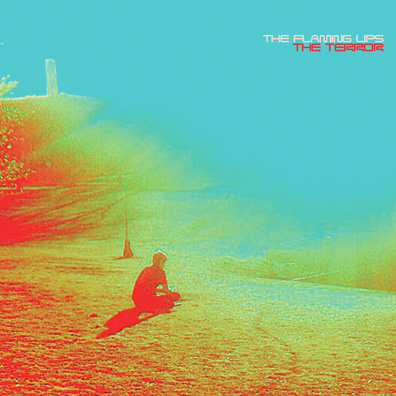
ALBUM REVIEW: The Flaming Lips - The Terror

by Robby Beck


In a way the musical trajectory of The Flaming Lips closely matches that of one of their greatest influences, Pink Floyd. Both bands started out making noisy, druggy psych rock with loads of dark eccentricities. As both bands gained exposure their material became more dense, complex, and concept-oriented. They were crafting symphonies with their rock music rather than just writing songs. Even as both of these bands grew to become household names, their music and experiments just became more complex in the process. There aren't many bands that can gain such substantial notoriety while keeping their ever-expanding artistic vision intact. In Pink Floyd's heyday, they could do whatever they wanted and retain their success, and The Flaming Lips have been in that camp for years.

Ever since The Flaming Lips' 2009 double album Embryonic this band has just been piling on experiment after experiment and basking in their too-big-to-lose status. Among these include releasing at least one song every month in 2011, collaborations with the likes of Lightning Bolt, Neon Indian, Yoko Ono, and Ke$ha (of all people), and a 24-hour song. Yep. But all this seems to have been in place of putting out a new full length album, rather than in preparation of one. We got a fairly cohesive collaborative album on Record Store Day last year, but The Terror is the first proper studio LP we're getting from the Lips since 2009's Embryonic. Before you consider anything else, just bet on this: this band is not done reinventing themselves with every single album.

A press release that frontman Wayne Coyne put out with the album's announcement states the album's concept:
We want, or wanted, to believe that without love we would disappear, that love, somehow, would save us that, yeah, if we have love, give love and know love, we are truly alive and if there is no love, there would be no life. The Terror is, we know now, that even without love, life goes on... we just go on… there is no mercy killing.
This feeling is integral to your understanding of The Terror. Vast landscapes of nothingness, loneliness, desolation. The Terror has been called a nightmarish album, but the nightmare here is that you are alone, you are nothing but nothing and the world is full of you.

This album is easily the band's biggest embrace of ambient and drone music, in fact an LP this reminded me of right at the get-go was Tim Hecker's Ravedeath, 1972. The Terror evokes the same kinds of apocalyptic and desolate musical tropes that that LP does so strongly. This album starts off with "Look... the Sun is Rising" which is one of the most fleshed out segments on the album as far as instrumentals. There are live drums, which only appear in a couple other instances, and while many of the electronics and effects on this record mesh together and become an all encompassing atmosphere, there is a singular synth line on this track that is somewhat catchy. That is once you get past how unsettling it can be. Wayne's voice doesn't really shine out on this track though, where it does start making an impression is "Be Free, A Way". Wayne's voice is usually on the forefront of many of this band's releases, but the way it's utilized on The Terror is extremely unique; it's clearly his voice, but it's put through a set of delay effects that bring an eerie echo to his voice that reverberates throughout everything else in the music. This strange effect and the echo it creates symbolizes the sheer emptiness of the world this record exists in, with Wayne's voice calling out to anything that can listen but his voice just bounces off of every inanimate object and remains unheard. If a tree falls in the forest, and no one's there to hear it, did it really make a sound?

"Try to Explain" is the one soaring, passionate moment on the record, with Wayne's vocal melody perhaps reaching a height that is almost blissful and beautiful before being pulled back into the darkness and nothingness around it. The truly demented nature of The Terror comes out in droves on its 13 minute centerpiece "You Lust". It is one of the most repetitive moments of the record, but while it's not exactly a loud song it is unrelenting in its tortured and harrowing nature. The harsh electronics interjecting near the end of "Turning Violent" further go on to convey the harshness of this environment. The final track in a way ends off where the album began; live drums make another appearance, the instrumental wells up in a more rock-style manner, and Wayne is singing about how this dread and monotony he is going through is "always there."

The Terror is one of the darkest records The Flaming Lips have ever made, and it is also their most fully realized piece of work since The Soft Bulletin. I haven't spoken on many of the musical ideas of a number of tracks, but that's because to do so would almost be pointless; The Terror is an experience you must invest yourself into and only then will you reap the twisted rewards. A lot of great albums create a dense world that listeners can actively explore and find new pieces of wonderment with in every listen. The Terror creates a universe that is no less dense but exploring it leads only to pain, death, loneliness, desolation, grueling monotony. The true Terror is that with every new listen, you'll find a new piece of this empty, unbearable purgatory.

"We don't control the controls."

Score: lite to decent 9

(Don't be too terrified of this review to follow Robby on twitter @ClydeNut)
read more "ALBUM REVIEW: The Flaming Lips - The Terror"

Saturday, April 13, 2013

ABANDONED THEATER: Kicked To The Curb


In the minds of many, Terrence Malick’s career has gone from missed to over-stated in the last decade. Just look at the Rotten Tomatoes or what his actors think of him. Malick’s focus has shifted from plot and dialogue to scenery and picture, leaving many fans of film in a hazy befuddlement after watching The New World, The Tree of Life, or especially his latest, To the Wonder. Some have called his 2013 film self-parody, or an expensive-looking commercial, but those criticisms are shallow and not worth listening to, really.  They substitute personal taste and snarky jabs in the stead of even attempting to unpack a film’s intention and themes. That type of criticism dumbs down the conversation and, in the end, belongs on dorm room floors with bongs and self-inflated thrusts of undergrad faux-philosophy[i] and art criticism[ii].

There is something to be said for the film’s flaws, though. To the Wonder is Malick’s most impressionistic and ethereal film yet, which leaves a lot of unanswered questions as to what is going on in the film. The story floats between Neil (Ben Affleck) and Marina’s (Olga Kurylenko) relationship, Neil and Jane’s (Rachel McAdams) relationship, and Father Quintana (Javier Bardem) and God’s relationship without setting strict boundaries of where the stories begin and end. The characters are practically silent, even, with even less voice-over than one would expect from a Malick film. Everyone flows in and out of constant states of loneliness and false connections. No one in this story feels connected to anyone else, and all they want is that connection. They want to better understand what it is to be someone else, what it is to be one with someone else, and to understand God, if there is even a God. By the end of the story, no one learns anything, because we can’t ever truly learn how to avoid these feelings unless they are delusional. Malick is merely asking the about these truths, as are his characters. They look into the vast beauty of the world for answers.

At least we get beauty. And actual thought on these vast ideas.

The problems with To the Wonder come at whether or not people find value in these meditations. The naysayers are types of people who crave energy, characterization, plot, dramatic arch and/or structure. If Malick’s meditations are disinteresting to some, then this movie is not for them, which is fine. Personal taste (or more obviously in our negative culture, distaste) is a way we define ourselves. Some people listen to Death Grips, some people listen to Handel[iii] compositions, and some people are eclectic and listen to both. Some people think Irrational Games’s Bioshock: Infinite is a fantastic video game that was worth the 5 year wait thanks to its emphasis on story, while others think it is a crap 1st person shooter that is overly serious[iv]. The key point is that whether not a movie is for someone or not is different from what the film is trying to accomplish and what it does in fact accomplish.

Malick is most definitely reaching for those unanswerable questions in his latest film, as he was in his Academy Award nominated, Palm d’Or-winning The Tree of Life. He packs To the Wonder with similar tricks and tropes, but the ideas he are reaching for are much less optimistic and hopeful. His characters in The Tree of Life were sad in their own way, but by the end of the film, they saw a version of heaven and felt beauty and together at last. Here in To the Wonder, we are left with uncertainty and oscillating and unreliable relationships between people who know what they want, but not how to achieve that goal.

And they never learn. They probably will never learn. But they try. They dance in fields, walk amongst buffalo, witness the strange elegance of sea turtles, exist in a constant state of sunset, touch beautiful stain glass windows in churches, make love, kiss one another’s feet in humility, throw furniture in a rage, clean up the messes silently, and repeat. It sounds banal, but it is not. These moments, small and large, are where we show our true selves in real life. Do we stop and smell the roses, or do we run past? It is hard to tell what the characters do, but those moments where they take in the world around them, they are obviously at their happiest. Marina and Neil are never happier than when they are experiencing the beauty of the world around them, and never sadder than when at home, doing nothing. Neil and Jane work when they watch the horses run on her ranch, but they also fall apart as Neil and Marina do. Father Quintana is helping people by giving them the comfort organized religion offers, but when he is alone, he avoids the world as much as he can because it pains him to see the mockeries that he believes God thrusts on his flock.

By the end of the film, we see there is no end. I’m wondering if Neil and Marina will not be together again, or Neil and Jane. Like Richard Linklater’s Before Sunrise/Before Sunset films, Neil could meet with these women forever, only to be disappointed by the result and unable to connect again. Even during the film they leave one another and reunite, even to marry. The perpetual nature of the relationships, for better or for worse, feels true to life. Malick’s focus on picture and scene over characters also harkens to Resnais’s Last Year at Marienbad, a film about beauty, façade, and puzzles which tells its story by looking at beautiful architecture, shallow but elaborate façades, and contains many games which acts as to further puzzle, but also at times enlighten, the viewer of the film. I don’t know if Malick had Linklater or Resnais on his mind as he made To the Wonder, but they, especially Malick+Resnais, are in the same conversation, for sure, for ambiguous filmmaking.

This may not be Malick’s best film (it’s not) but he is going further and further into his own style. I have no doubt that he will become even more experimental as his strangely accelerating career continues. He is currently editing 5 films, and to think he once went 20 years without a film between Days of Heaven and The Thin Red Line. We live in a world where our entertainment and art is becoming more obvious and cleanly plotted, so a film like To the Wonder feels like a breath of fresh air.  I in no way want every film to be like this, without a standard plot or even dialogue, but I appreciate and enjoy this one. Chances are, though, that Malick does not care if you make your choice and not pay to see his movie, which is your right[v]. Malick is making movies for himself, and I’m happy to be along for the right until his next long hiatus.

I give To the Wonder a decent 8 out of 10.


[i] Kind of ironic that this is one of the big criticisms labeled against Malick, huh?

[ii] Keep in mind, I just graduated college myself. So feel free to call me out for my own pretentiousness. I’m *this* close to adding a winky emoticon to this blog post.

[iii] I like Death Grips and Handel.

[iv] I think it rocks. Maybe Kyle will review it soon for YPOIW?

[v] Unless you live in some weird Malick-only commune.
read more "ABANDONED THEATER: Kicked To The Curb"