Showing posts with label movie review. Show all posts

Saturday, April 13, 2013

ABANDONED THEATER: Kicked To The Curb


In the minds of many, Terrence Malick’s career has gone from missed to over-stated in the last decade. Just look at the Rotten Tomatoes or what his actors think of him. Malick’s focus has shifted from plot and dialogue to scenery and picture, leaving many fans of film in a hazy befuddlement after watching The New World, The Tree of Life, or especially his latest, To the Wonder. Some have called his 2013 film self-parody, or an expensive-looking commercial, but those criticisms are shallow and not worth listening to, really.  They substitute personal taste and snarky jabs in the stead of even attempting to unpack a film’s intention and themes. That type of criticism dumbs down the conversation and, in the end, belongs on dorm room floors with bongs and self-inflated thrusts of undergrad faux-philosophy[i] and art criticism[ii].

There is something to be said for the film’s flaws, though. To the Wonder is Malick’s most impressionistic and ethereal film yet, which leaves a lot of unanswered questions as to what is going on in the film. The story floats between Neil (Ben Affleck) and Marina’s (Olga Kurylenko) relationship, Neil and Jane’s (Rachel McAdams) relationship, and Father Quintana (Javier Bardem) and God’s relationship without setting strict boundaries of where the stories begin and end. The characters are practically silent, even, with even less voice-over than one would expect from a Malick film. Everyone flows in and out of constant states of loneliness and false connections. No one in this story feels connected to anyone else, and all they want is that connection. They want to better understand what it is to be someone else, what it is to be one with someone else, and to understand God, if there is even a God. By the end of the story, no one learns anything, because we can’t ever truly learn how to avoid these feelings unless they are delusional. Malick is merely asking the about these truths, as are his characters. They look into the vast beauty of the world for answers.

At least we get beauty. And actual thought on these vast ideas.

The problems with To the Wonder come at whether or not people find value in these meditations. The naysayers are types of people who crave energy, characterization, plot, dramatic arch and/or structure. If Malick’s meditations are disinteresting to some, then this movie is not for them, which is fine. Personal taste (or more obviously in our negative culture, distaste) is a way we define ourselves. Some people listen to Death Grips, some people listen to Handel[iii] compositions, and some people are eclectic and listen to both. Some people think Irrational Games’s Bioshock: Infinite is a fantastic video game that was worth the 5 year wait thanks to its emphasis on story, while others think it is a crap 1st person shooter that is overly serious[iv]. The key point is that whether not a movie is for someone or not is different from what the film is trying to accomplish and what it does in fact accomplish.

Malick is most definitely reaching for those unanswerable questions in his latest film, as he was in his Academy Award nominated, Palm d’Or-winning The Tree of Life. He packs To the Wonder with similar tricks and tropes, but the ideas he are reaching for are much less optimistic and hopeful. His characters in The Tree of Life were sad in their own way, but by the end of the film, they saw a version of heaven and felt beauty and together at last. Here in To the Wonder, we are left with uncertainty and oscillating and unreliable relationships between people who know what they want, but not how to achieve that goal.

And they never learn. They probably will never learn. But they try. They dance in fields, walk amongst buffalo, witness the strange elegance of sea turtles, exist in a constant state of sunset, touch beautiful stain glass windows in churches, make love, kiss one another’s feet in humility, throw furniture in a rage, clean up the messes silently, and repeat. It sounds banal, but it is not. These moments, small and large, are where we show our true selves in real life. Do we stop and smell the roses, or do we run past? It is hard to tell what the characters do, but those moments where they take in the world around them, they are obviously at their happiest. Marina and Neil are never happier than when they are experiencing the beauty of the world around them, and never sadder than when at home, doing nothing. Neil and Jane work when they watch the horses run on her ranch, but they also fall apart as Neil and Marina do. Father Quintana is helping people by giving them the comfort organized religion offers, but when he is alone, he avoids the world as much as he can because it pains him to see the mockeries that he believes God thrusts on his flock.

By the end of the film, we see there is no end. I’m wondering if Neil and Marina will not be together again, or Neil and Jane. Like Richard Linklater’s Before Sunrise/Before Sunset films, Neil could meet with these women forever, only to be disappointed by the result and unable to connect again. Even during the film they leave one another and reunite, even to marry. The perpetual nature of the relationships, for better or for worse, feels true to life. Malick’s focus on picture and scene over characters also harkens to Resnais’s Last Year at Marienbad, a film about beauty, façade, and puzzles which tells its story by looking at beautiful architecture, shallow but elaborate façades, and contains many games which acts as to further puzzle, but also at times enlighten, the viewer of the film. I don’t know if Malick had Linklater or Resnais on his mind as he made To the Wonder, but they, especially Malick+Resnais, are in the same conversation, for sure, for ambiguous filmmaking.

This may not be Malick’s best film (it’s not) but he is going further and further into his own style. I have no doubt that he will become even more experimental as his strangely accelerating career continues. He is currently editing 5 films, and to think he once went 20 years without a film between Days of Heaven and The Thin Red Line. We live in a world where our entertainment and art is becoming more obvious and cleanly plotted, so a film like To the Wonder feels like a breath of fresh air.  I in no way want every film to be like this, without a standard plot or even dialogue, but I appreciate and enjoy this one. Chances are, though, that Malick does not care if you make your choice and not pay to see his movie, which is your right[v]. Malick is making movies for himself, and I’m happy to be along for the right until his next long hiatus.

I give To the Wonder a decent 8 out of 10.


[i] Kind of ironic that this is one of the big criticisms labeled against Malick, huh?

[ii] Keep in mind, I just graduated college myself. So feel free to call me out for my own pretentiousness. I’m *this* close to adding a winky emoticon to this blog post.

[iii] I like Death Grips and Handel.

[iv] I think it rocks. Maybe Kyle will review it soon for YPOIW?

[v] Unless you live in some weird Malick-only commune.
read more "ABANDONED THEATER: Kicked To The Curb"

Saturday, March 30, 2013

ABANDONED THEATER: Like an Observer in Love, Through a Window


This review/essay features spoilers, but it is not a film that can be ruined by knowing the plot because it is not a plot-based film. But I feel obligated to warn you.

Iranian filmmaker Abbas Kiarostami is the mastermind behind many of the great art house films of the last 40 years[i]. His latest film, Like Someone in Love, is produced with Japanese and French money and is filmed in Tokyo. Not only does Kiarostami continue his international tour of the last few years, but he also plays with the common theme in his career—what roles do people play?[ii]

This time around, with Like Someone In Love, he runs with Japanese culture mixed with worldly themes. And again, Kiarostami has created a masterful film. The cast of characters features an old professor (Takashi, played by Tadashi Okuno), a young call girl (Akiko, played by Rin Rakanashi), her obsessive boyfriend (Noriaki, played by Ryo Kase), the professor’s nosy neighbor, and the people each of these characters pretend to be throughout the film’s runtime. Most of the story takes place inside cars and in the meandering moments between what we usually take for plot. After anything significant happens in this film, the characters spend time driving from one location to another, and in those in-between moments, we learn more about them than any other time.

Akiko is ashamed of her job as a high class prostitute, as can be seen at numerous moments, but not least of all when she asks her taxi driver, who is taking her to the professor to “escort,” to drive around the same statue several times because her grandmother is standing there, waiting for her. She has no intention of seeing her grandmother, but she cries thinking about abandoning her family for her job, feeling quite powerless about the situation. Of all of the great, quiet sequences in this film, this one is the most beautiful and the least ambiguous—a great moment to gain bearings in such an ethereal film.

Takashi is a former college professor of sociology and a book translator. These professions speak directly to the film’s complex meaning, since it is a different society and language from Kiarostami’s own and it deals with the way people act with one another. Takashi and Akiko first meet one another awkwardly in the elder’s apartment. Akiko uses the restroom and comes out a different woman, one of her two major roles, playing the character of high class escort for the old man, who is treating her like he would someone on a casual date or a polite get-together. He has no intention of sleeping with her as far as I can tell. They discuss art and life, and Akiko grows tired and goes to bed before having any wine or dinner that Takashi has prepared for her. Takashi wants companionship, for he is very lonely as we learn later from his neighbor.

Then he takes her home the next day. He meets her abusive and wild fiancé, Noriaki, a mechanic who quickly offers to fix Takashi’s car because there is a basic misunderstanding—he believes Takashi is Akiko’s grandfather, and while Takashi does not tell him that he is not her grandfather, he doesn’t fight the assumption either. Their daily adventures continue together, and the themes of the film start clicking at about this point. Takashi has taken the role of grandfather believably, and he shows to be a naturally paternal figure. But it is a false role nonetheless. She is Akiko’s john, not her grandpa.

A lot of what we see of the characters comes from behind windows or off of mirrors, screens of glass, and this is especially true in the car. Even in Takashi’s apartment, we see Akiko reflected from his TV screen for a while. The transparent or reflective surfaces give us glimpses into the souls of these characters, into the hearts of their sadness (or sadness of their hearts?), and especially the lies they tell. Each character plays a role, as we do in real life. Takashi plays the role of Akiko’s grandfather, Akiko doesn’t resist and uses Takashi as an elderly/paternal/maternal figure in lieu of her own abandoned grandmother, and Akiko’s fiancé believes in the traditional role of a husband as the provider and master of the household. Takashi sees the flaws in their relationship, but as most grandparents and parents find, they have very little influence in how they directly affect the lives of children and young people. Rather, they are left to pick up the pieces and care for them. And Takashi does this for Akiko, until the abrupt and chaotic end of the film.

There is a small, important moment late in the film, where Takashi picks up Akiko after the girl has been hit by Noriaki. He brings her home and goes to the pharmacy to get her medicine. Akiko has a discussion with Takashi’s nosy neighbor, who looks at Akiko at first from behind a sheer curtain, and always through the window, even they are engaged in conversation about how much the woman loves Takashi and cares for her very real mentally handicapped brother. We learn from the woman and her constant gazes at the Takashi residence that his wife has been gone for a long time and his daughter never visits. Again, he is supremely lonely. Even the woman in the window assumes Akiko is Takashi’s granddaughter, so the ruse is complete. Until Noriaki arrives at Takashi’s home.

We, the audience, are like the woman in the window. We watch these characters live their lives, and are powerless to affect them. Takashi, who is in the midst of the action, is also powerless. We, in the audience, are always living vicariously through the characters in movies. Like Someone in Love is no different. We care for these sad characters, and even get to see Noriaki at his best and worst, being kind of condescendingly helpful and wildly violent[iii], to show his dynamism, and in the end, Kiarostami slaps us in the face with one of the most violent climaxes I’ve ever seen. And there was no blood.

Noriaki is demanding to enter Takashi’s home, to get to Akiko, and he pounds on the door and screams. Children playing can be heard. The woman in the window and her brother can be heard. And as Takashi nervously looks out a window, a brick flies through it, crashing through the barrier between him and the abuser. Tashaki falls to the ground, and it is unclear whether he was hit or not. That barrier between us and Takashi is also broken, as represented through that window and every screen or barrier between characters, since we are watching through a screen as well. We play roles just as Takashi and Akiko do. Kiarostami reflects real life to his audiences, and he always has. The metaphor might be at its strongest here, in his latest film.

The window is broken. The film is over. The end.

I give Like Someone In Love a lite 9 out of 10.


[i] In 1990, Abbas Kiarostami made the pseudo-documentary Close-Up, which is one of the most brilliant combinations of documentary filmmaking and staged drama filmmaking in the history of the art forms. He won the Cannes Film Festival’s prestigious grand prize award (Palme d’Or) in 1997 for Taste of Cherry. His long career continues to produce great films—arguably his best, Certified Copy, came out in 2010. Certified Copy deconstructed marriage and the roles that husbands and wives fill, even through two relative strangers. Juliette Binoche and British opera singer William Shimell played opposite one another in Kiarostami’s first internationally produced film. Kiarostami continues his international tour, much as Woody Allen has in the last decade, and this time his focus is in Tokyo instead of Tuscany, as it was in Certified Copy.

[ii]  The meta-theme of roles ties wonderfully into films and Kiarostami is the king in this regard. Great filmmakers like Akira Kurosawa, Martin Scorsese, Quentin Tarantino, and Michael Haneke have expressed admiration for his art.  And it is not hard to see why. Kiarostami’s vision is uniquely his own, and while he has riffed off of the themes of others (See Certified Copy through the lens of Linklater or Wong Kar Wai and much older directors, and the inspirations are there) his vision is always unique and never a retread. He takes inspiration and runs with it.

[iii] Off-topic/meta-moment: I love lovely adjectives and I use too many.
read more "ABANDONED THEATER: Like an Observer in Love, Through a Window"

Sunday, March 24, 2013

ABANDONED THEATER: Spring Break Foreverrrr


Harmony Korine’s Spring Breakers is not your parents’ film. Actually, it is not a lot of people’s film. Movie goers who hate non-linear, elliptical narratives[i] will not like this movie. Movie goers may not like the dream-like quality the plot takes on, filled with drugs and bare tittays and even violence. A tone poem set to screen, nothing about Spring Breakers screams standard, regardless of the advertising team’s attempt to lure fans of Project X and other party films.  But maybe that is Korine’s ultimate joke: the bros and hos are lured to this film to see his portrayal of their utterly ridiculous need to lose themselves in their own debauchery.

Spring Breakers is also prayer-like. When praying the rosary, good lil’ Catholics repeat repetitive phrases so they can reach that sweet spot in perception to truly meditate on God and life and all of that good stuff. Buddhists and other faiths have similar rituals. Korine uses repetition of neon colors, impressionistic filming techniques, obscene images, specific meditative scenes, raucous character actions, and especially dialogue to reach this sort of trance for the viewer.

Spring break. Spring break. Spring break foreverrrr.

The four girls (played by Selena Gomez, Vanessa Hudgens, Ashley Benson, and Rachel Korine, the wife of the director) decide to go find themselves on their spring break. They wander through the lustful nightmarescape of naked co-eds covered in booze, sand, and cocaine. These scenes are told through the point-of-view of Gomez’s character, Faith, who is a manifestation of Christian faith. She is a good girl torn between the sin and salvation of her childhood, which is represented through her religion and also her three other friends. About halfway through the movie, after these four girls end up in their inevitable destination of jail for drug possession, everything changes. They are bailed out by gangster and trap rapper Alien, played insanely by James Franco, who acts as their savior. Gomez bails and goes home, wizening up, which disappoints Franco’s sex and money-obsessed Loki character.

Spring break. Spring break. Spring break foreverrrr.

A major shift happens at this point in the movie. The movie is now Franco’s. Gomez chooses the side of salvation, leaving the nightmare behind, leaving a vacuum in the film, which is promptly and wonderfully filled by Franco[ii]. Franco acts as the big, gangsta devil on the shoulders of these remaining three college girls, as they piss off local actual-gangsters and rob all of the spring breakers in St. Petersburg and infringing on turf. The most memorable scenes in this film, which is largely sans actual narrative scenes—harkening back to the idea that this is more of a tone poem and less of a narrative film—feature Franco. These scenes are still not actual scenes, but elliptical pictures of a hilarious grill-fronted corn-row-wearing rapper who has money and guns littering his bed, nun chucks and swords on his wall, Calvin Klein cologne on his dresser, and dark tannin’ oil for when he’s lying by the pool. “This is my shit” is one of the memorable mantras of Spring Breakers that many people would probably quote unironically.

Spring break. Spring break. Spring break foreverrrr.

This idea goes back to the audience question again. Who is this movie for? Is it for the bros and hos? They cannot honestly enjoy the lack of narrative—one girl getting into trouble and the other girls have to save her in a Hangover like fashion. Also, the snobbier film fans might balk at the outright absurdity of the characters and the porno-like quality to the dialogue. This leaves a somewhere in-between for the movie. When I saw the film, I left the theater hearing people complaining that they sat through the worst movie they had ever been to in their entire lives. I think the peopleI saw it with —and a small group it was—were the only four in the entire theater who understood it, but a lot of that understanding occurred after discussions on the drive home.

Spring break. Spring break. Spring break foreverrr.

That is where a lot of the work comes afterwards. It is not the sort of instant gratification film like you expect when you see so many partiers throughout its runtime. No, instead we have a very contemplative movie underneath the neon scuzz and tanning oil residue. And the heart of this contemplation comes during the movie’s best and most bizarre scene, where Alien serenades the three remaining girls, who are wearing sweatpants and hot pink ski-masks, to the tune of a Britney Spears song. He plays the song poolside (and oceanside) on a white baby grand piano. Alien refers to Spears as an angel and lifts her memory, as if she was dead, to be that of a paragon of beauty and virtue. The girls twirl with machine guns hand-in-hand in an inebriated exhilaration. To these people, they are one another’s mother-fuckin’ soulmates and this is perfection. In the end, virtue is what these characters lack, unless you look through their shutter-shade viewpoints. They think that their existence has the most meaning, of gangbanging and partying. But do we want to see their point-of-view? That goes back to my original question—who is this movie for?

Spring break. Spring break. Spring break foreverrrr.

I give Spring Breakers a strong 8 to a lite 9 out of 10.


[i] Think Terrence Malick’s Days of Heaven, or even The Tree of Life, mixed with the rebellion of Badlands. Malick, by the way, is one of Korine’s biggest influences.

[ii] Alien is one aspect of Spring Breakers that is easy to enjoy at all times. He is hilarious in how unrealistic he is, but in how realistic he is. His single-mindedness leads to some outrageous moments and dialogue. He reminds me of John Goodman’s Vietnam vet character in The Big Lebowski—everyone’s favorite character in an inevitable cult classic. Franco’s performance is also impressive because he is the spitting image of this alternative, outsider rapper—Riff Raff. Pitchfork has a great video about this character. Do you see the resemblance? 


read more "ABANDONED THEATER: Spring Break Foreverrrr"

Monday, February 25, 2013

ABANDONED THEATER: Steven Soderbergh, the Side Effects of a Career Doppelganger


I

Steven Soderbergh has always been a culmination of many influences. He believes in the entertainment value of a big budget flick as well as the powerful voice a small film and sustains our thinking minds—at least until recently. When Steven Soderbergh announced his retirement from filmmaking, I was saddened and surprised. I admire his filmmaking quite a bit, and his voice has always been one I admire, at least since I began appreciating film the way I do now. I’m not surprised that he is quitting, having watched some interviews from 2008 on The Criterion Collection’s Che supplements. He doesn’t have faith in film any more. It is too disposable to people, and maybe to itself. When we leave films today, Soderbergh says we ask, “What do we get for dinner?”  And he’s right. And it’s sad.

But back to the positives, and to how we got “here:” Soderbergh’s career has been a slow evolution from indie darling to extremely precise genre cowboy. He can do anything, from an epic like Che to a crowd-pleasing heist film like Ocean’s Eleven to a quiet art house film featuring non-professional actors like Bubble, and he always does it with the sort of precision other filmmakers cannot pull off.

It all started early with Soderbergh, when he won the Palme d’Or at the Cannes Film Festival (1989) with his first feature Sex, Lies, and Videotape. He proved to be a major player in the film world, and with the likes of Richard Linklater (Before Sunrise/Before Sunset/Before Midnight, Dazed and Confused, Bernie) allowed the Sundance Generation (the Gen X-ers) to spark an independent film boom. Soderbergh himself was nominated for a Screenwriting Oscar for Sex, Lies, and Videotape after his Sundance and Cannes wins, which paved the way for people like Benh Zeitlin to accumulate four Oscar nominations for his own Sundance hit this year—Beasts of the Southern Wild.

Soderbergh improved from his impressive debut. His two masterpieces are his Oscar-winning film Traffic and his underrated Che biopic. With Traffic he combined three stories, only related by theme, into one film using very different shooting techniques. It was also the first time he shot his own film as his own director of photography. He used a blue filter for the cold world of politics and family in D.C. and Ohio, he overexposed his footage of Mexican cops dealing with a corrupt drug world, and he used top-lit and strobe-light-like techniques in his DEA storyline in California. The story is coherent, enthralling, and insanely creative in its depiction. On Che, Soderbergh’s craftsmanship continued by acting as his first exposure to RED digital cameras. In two films, Soderbergh impressively tells Che’s story by first shooting vibrantly the heroic ascension of the revolutionary in Cuba in the first film, and then his failed re-revolution in Bolivia with a more handheld, different aspect-ratioed approach in the second. Regardless of one’s opinion of Che, Soderbergh’s journalistic take on how someone can go from hero to failure, yet remaining simultaneously distant to identifiable, especially with such a controversial figure, is well-done.

A wide variety of films are peppered throughout Soderbergh’s filmography, which is the ultimate allure for me to his filmmaking. “What the hell is he going to do next?” is a common thought I have.  He was interested in making commercial films with all-star casts and insanely low budget indie films, like Bubble and the Sasha Grey-staring The Girlfriend Experience. He created schizophrenic depictions of himself in the experimental and masturbatory Schizopolis. In the late 90s, along with Tarantino and Fincher, Soderbergh left a lasting impact on crime films, with The Limey and the George Clooney-starring Out of Sight. His recent string of films (The Informant!, Contagion, Haywire, Magic Mike, Side Effects, with Haywire being the only possible weak link) is particularly strong and unified in their depiction, even though their stories are vastly different. And now it is over, right when Soderbergh found a style to stick to, and was reaching the outer limits of the genres he is constantly wrangling. The end.

II

Side Effects, Soderbergh’s last film, according to the director himself, is a nice ending for him. Soderbergh has never so obviously riffed off of Hitchcock, but he does here, and in the best possible way. It is a mystery wrapped in a mystery based on the pharmaceutical and psychiatry industries intermingling with one another. It is broadly political, but more about the twists and turns and characters therein. I’m not going to go into plot details, because this movie is incredibly spoilable, with its twists and turns each wonderful, like in the best Hitchcock films[i].  but I will say that it acts as a perfect culmination of Soderbergh up until this point.

Side Effects is an homage to the past, filled with its smart thrillers featuring all-star casts, for the modern day. Hitchcock worked with Jimmy Stewart, Cary Grant, and Ingrid Bergman time and time again, while Soderbergh has worked with George Clooney and Matt Damon repeatedly. Lately, his fascination has been working with Jude Law and Channing Tatum. Tatum’s work with Soderbergh (Haywire, Side Effects, and especially Magic Mike) is the only reason I take him seriously as an actor. I’ll consider seeing his future movies, because I know he can act and he takes his roles seriously, as shown in his work with Mr. Soderbergh. In Side Effects, Jude Law gives one of his best performances in a while, outside maybe Anna Karenina, and he surprisingly works very well as the Jimmy Stewart/Cary Grant character in this case.  He is flawed, a bit unstable, but incredibly identifiable. Of all of the characters in Side Effects, we return to Law’s plight in as the man wronged (not going into detail—no plot here!). But he is not the only talent in the cast. Tatum, Catherine Zeta-Jones, and a fantastic turn by Rooney Mara round out this effective ensemble.

Soderbergh’s work with ensembles is storied. There is almost no one better at wielding a large cast than he is. He observes each of his characters in Side Effects with care, as he did in Out of Sight, Traffic, and Ocean’s Eleven. Each character has their moment where we, the audience, identify with them, and each show their flaws in big ways. There is nothing inauthentic about how these people are depicted, through even their worst actions. Part of the strength, other than the acting and writing, is how these characters are depicted through Soderbergh’s cinematography and editing.

The digital image age is upon us, and Soderbergh, alongside those like Michael Mann and even old-school Martin Scorsese as of late, champion its implementation in modern film. Luddites like Quentin Tarantino lament for film and shooting on film, but with modern cameras, there is no limit to the power of the digital cinematography and editing. Soderbergh recognizes this, and he loves the look of the digital image. It sanitizes the shot, as opposed to the cloudier look of a movie shot on film. By using these cameras, smaller and more nimble than ever, Soderbergh investigates the aesthetic of observing people acting. The digital image is better for this sort of observation filmmaking than the more authoritative picture on film.

Sodebergh is interested in observing people acting out roles in the real world. In The Informant!, Matt Damon’s character is a big lie-within-a-lie, fooling everyone that he is some sort of hero, even himself. With Bubble and The Girlfriend Experience, we have women protagonists who are playing roles, whether that is of the confidante in times of trouble (Bubble) or the “girlfriend”. Maybe the best example is Magic Mike, in which Channing Tatum’s protagonist is playing the role of male stripper when he is truly a businessman, and even an artist, at heart. It is always for some perceived reward, whether money (Magic Mike, The Informant!) or alibi (Bubble). Side Effects continues this trend in Soderbergh’s observational digital filmmaking, with multiple characters playing roles within the film itself, in a meta way even.

Soderbergh, from the beginnings of his career, has always been an influential force on film. He influenced the indie film generation. He influenced the all-star blockbusters of the 2000s. He influenced the digital film transition today. Yet somehow, he always remained anonymous. The anti-auteur, Soderbergh always made films that could be anyone’s. He is his own cinematographer and editor, but he uses pseudonyms. He is playing roles, like his characters that he is so fascinated by in each film. Side Effects is no different in this approach to filmmaking. Soderbergh is acting as Hitchcock.

While Soderbergh never achieved to be the best filmmaker there ever was, he was incredibly focused in his interest of telling stories in the best ways that he could. And now that he is done making films—save for a made-for-TV movie coming out on HBO about Liberace, another left-turn—we can’t look forward to another Soderbergh film. Except we can. His influence is everywhere, and he always works anonymously. He always was one for playing roles, and thanks to his influence, many other directors are playing Soderbergh.

The snake eats its own tail.

I give Side Effects a Decent 8 out of 10.


[i] I’m looking at you Vertigo!
read more "ABANDONED THEATER: Steven Soderbergh, the Side Effects of a Career Doppelganger "

Sunday, January 20, 2013

ABANDONED THEATER: Robby's Top 20 Films of 2012: 20-11

(Abandoned Theater is the segment of YPOIW where TJ and others (but mostly TJ) discuss another one of our great passions: film. Today however Robby is going to chime in on a two-part series of his top 20 films of 2012. Here is the first part of this list, counting down from #20 to #11. Part 2 will be up soon)

20. Django Unchained


Quentin Tarantino's mashup tale of spaghetti western-meets-blaxploitation revenge fantasy was the kind of shock to the system we always welcome from the man. After literally rewriting history in depicting his version of the downfall of the Nazi regime in 2009's masterful Inglourious Basterds, Tarantino jumps back in Django Unchained to make a "southern" where the slave is the hero. While the catharsis of seeing Jaime Foxx's title character crack a whip on a former abusive owner is certainly there, there are never any overbearing historical lessons or lectures. Instead you get a classic heroic quest of a man coming from the bottom and ending at the top; Tarantino just chose to accurately depict slavery right in the middle of it.

19. Bernie


The strangest factor about Richard Linklator's Bernie is how ambitious and complicated it turned out to be; with balancing the acted out narrative with accounts of real-life residents of the Texas town that this strange story took place, the film could've fallen apart or conceded to one side more than the other, etc. Instead Linklator does this balancing act so carefully, and the end product ended up being one of the most earnest tributes to small-town life I saw in 2012. These people and their stories were treated with the utmost care and sincerity, and on the other side of the coin, Jack Black's portrayal of Bernie Tiede brought out a quietly funny, subtle side of him that none of us have seen before. It is far and away the best work he's ever done.

18. Skyfall


There just aren't many long-running franchises that can pull off what Skyfall did. The Bond series has gone in about as many directions as you can think a spy series can; so it's nothing less than a triumph that being its 23rd installment, this film feels so fresh and so fun and so new, yet is so rooted in Bond's history and everything that makes it resonate with so many. Not only that, but Skyfall brings a vulnerability and a depth to Bond that I've not seen in far too long and that makes Daniel Craig a staple of greatness in the Bond trajectory.

17. Excision


This is just the kind of film I needed in 2012. Excision is the type of film that is twisted and warped in the best possible way. It's no surprise that John Waters is involved in the project. There aren't many films that can have me jaw-dropped in awe of the horror of a situation, while wondering if I should be laughing or not. And at the center of it all, perhaps the anchor that makes it all work, is AnnaLynne McCord's transformative performance. Excision is the great example of a director and an actor, who come across as perfectly normal people, going to the dark recesses of the soul and making art out of it. Beautiful, bloody art.

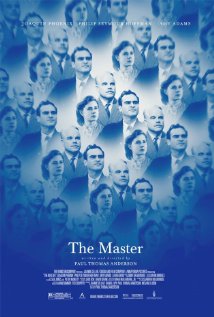
16. The Master


The Master is difficult no matter what way you look at it. Truthfully I'm still in a toss and turn about how much I really liked it, and how much I'm really rewarded for watching it. There are some elements of previous Paul Thomas Anderson works; Freddie Quell's social frustration and ticking-timebomb mentality is reminiscent of Adam Sandler's Barry Egan in Punch-Drunk Love; and Quell's relationship with Lancaster Dodd is comparable to the sometimes-friendship, most of the time-rivalry of Daniel Plainview and Eli Sunday in There Will Be Blood. But while those comparisons are there, The Master separates itself in being a staunch rebellion against structure. The Master almost acts as an ambient film; the parts are there laid out for you, but it makes no effort to give any help in assembling them. But you might find, as many viewers have, that the journey of figuring out The Master might be as savory as your destination.

15. Indie Game: The Movie


Video games are an art form. They can be as personal, soul-bearing, and born of great internal struggle as film, paintings, music, etc. That is the argument I think Indie Game: The Movie has presented by the end of it. While it's a sentiment I had already deeply believed in before I watched the film, it's so earnest and truthful and sometimes heartbreaking that I'm all the more confident to say it. Thank god for this film.

14. Seven Psychopaths


After 2008's fantastic In Bruges, writer/director Martin McDonagh makes another complex, artful film that might be too clever for its own good, but in some ways it's all the better for it. People throw around the Tarantino comparison constantly, but Seven Psychopaths reminds me just as much of a Charlie Kaufman film, in that it very much makes you think about the movies you watch and how they're constructed. While McDonagh might somewhat have the Tarantino syndrome of being in love with your own writing perhaps too much, I still think this is a beautifully executed, violent ride that's worth the occasional downfall.

13. Wreck-It Ralph


Yeah yeah yeah, I'm putting a Disney movie above Django/The Master/Skyfall/blah blah blah. Just calm down. In many ways Wreck-It Ralph is the Pixar-quality film we didn't quite get in 2012, to me; it's intensely inventive and creative in its universe and mechanisms, but its characters are so strongly and beautifully drawn out and developed, and the story so rife with complexities in its stakes and emotions it can't just be another cartoon. While Wreck-It Ralph may appeal to me with its intense video game-related knowledge and design, what moved me at the end of the day was how much I loved the characters and cared for their plights. When animated characters can feel just as real as anyone in a live action film, that's when you know there was magic there.

12. End of Watch


This was one of the biggest surprises for me in 2012. I had no clue walking into the theater that showed End of Watch that I'd be watching one of the best police films I've ever seen, and I fucking mean it. This movie is like a roller coaster from the very start, with its genius blend of incredibly realistic "found footage" style shots, with a traditional narrative. I was blindsided by this film, and I'm so happy I was.

11. Robot & Frank


Robot & Frank in many ways is a portrait of uncertainty; uncertainty of the future, of technology, of your staying power in an ever evolving world, and for Frank Langella, uncertainty of your ability to even function any more. Langella is an actor of great intensity, a factor that shines through even in one of his more understated roles. In fact perhaps Robot & Frank's greatest accomplishment is how quietly tragic Langella's Frank can be. In the process of watching him maybe we can grasp a stronger perspective about how strong our connection is, or isn't, with the world around us.

(That's it for part 1, part 2 is coming soon. In the meantime, be sure to follow Robby on Twitter @ClydeNut)
read more "ABANDONED THEATER: Robby's Top 20 Films of 2012: 20-11"

Saturday, January 19, 2013

ABANDONDED THEATER: Reflections of a Nation Demanding Blood


I

The screen is black. Live phone calls from the September 11th attacks, which as we know were orchestrated by the terrorist Osama Bin Laden, are playing over the speakers. People are screaming and the cacophonous sounds build and build. Everyone in the audience squirms uncomfortably, and everyone thinks about where they were that day.

The 9/11 attacks were unquestionably traumatic for everyone, but everyone remembers them differently, and in the 11 years following everyone has since reacted differently. Kathryn Bigelow[i] knows this, and in her most recent film, Zero Dark Thirty, she speaks to the multiplicity of public opinion in the wake.

II

Zero Dark Thirty is a masterpiece in the procedural genre. Zero Dark Thirty is a masterpiece in the war film genre. Zero Dark Thirty is Kathryn Bigelow’s best film to date; she’s 61 year old director and is now better than ever. Most of all, Zero Dark Thirty is an important film that is a direct reflection of the way Americans view their tragedies, their wars, and their victories.

This film is also the sort of art that a lot of people are going to dislike for various reasons. Some people with more liberal points-of-view dissuade viewers from watching this film because they believe it depicts torture as a valid method that allowed the United States to find and kill Osama Bin Laden. Other liberals find the film too jingoistic. On the other side, conservatives accuse the film for having an anti-military liberal agenda that gives Seal Team Six a sinister vibe.  Or, as many conservative politicians have, they can call out the film for its torture by being too loose on the facts and making the United States look bad. Before the film was even released, conservatives claimed the film would have been pro-Barack Obama propaganda, but they’ve backed off of that claim having now seen the film. Everyone was out for blood before the movie ever came out[ii].

No doubt, Bigelow and writer Mark Boal fudged some facts. The film is a fictional one after all, only based on fact. It claims a sense of journalistic integrity, and the film’s biggest weakness thus far has been its inability to separate itself from its journalistic pretentions. Boal was a journalist before he wrote The Hurt Locker, which was an insightful look into its protagonist (fantastically realized by actor Jeremy Renner) whose PTSD runs congruently with his daredevil personality.  That character needed thrills to stay alive, and most people took Boal/Bigelow/Renner’s depiction of the War on Terror as a cultural milestone in artistically understanding our current wars. Most agreed that this film felt authentic. But Zero Dark Thirty has been leveled with numerous accusations.

Zero Dark Thirty has been met with much acclaim by critics, winning many critics awards, and it has already matched The Hurt Locker at the box office with only 2 weeks in wide-release. It has been nominated for five Oscars, including Best Picture. There is a loud minority that is drowning out the film’s successes with accusations of faulty journalism and propagandist filmmaking. Again, while Zero Dark Thirty is foggy on some of its journalistic endeavors, those naysayers are missing the point widely by calling it propaganda. And that goes to either side of the political debate—liberal or conservative. The Hurt Locker was first great film on the Iraq War / Afghanistan War / War on Terror trifecta, but now Zero Dark Thirty is now the second, regardless of what the naysayers say.

III

To rebut these negative claims, I point everyone’s direction to Bigelow’s direction and the films quality. With her cinematographer (Greig Fraser), editors (William Goldenberg and Dylan Tichenor), and composer (the great and busy Alexandre Desplat who also scored Argo and Moonrise Kingdom this year), she crafts a movie that burrows its way deep into the audience’s brains. Desplat’s score is brooding and contemplative and never triumphant.  In the raid scene, where Seal Team Six finally get to Bin Laden and assassinate him, its hums disturbingly low, barely registering at times, instead of playing “our boys” home as heroes. Meanwhile, the editors flawlessly pace the movie, cutting concise scenes for such a strong procedural and then frantically amping up the tension when we actually get to the raid scene.

And then there is Fraser’s cinematography. The key to many of the film’s shots are the reflections of the actors’ faces—especially Maya’s, who is played by the multi-talented Jessica Chastain. Whether they are reflected off of windows, rear-view mirrors, or the glass on frames holding American flags, they hold immense meaning. Any great cinematic shot is rife with meaning and interpretation. Here, the shots are filled with intentional introspection by Fraser and Bigelow. We in the audience, and mostly as Americans, are supposed to be reflecting on the entire manhunt for Osama Bin Laden.  We have to ask questions.

Do we accept torture, even if it didn’t actually land us Bin Laden, as a method of saving lives? The torture depicted in the film is grotesque and in ways makes the audience sympathize with the terrorist being tortured. He is a man, and he can break like any man. Maya watches as interrogators do their jobs as assigned, and gain information on future terrorist attacks and possibly even the location of important Al Qaeda operatives. She sees the ugliness of these acts, the immorality—it sickens her—but she doesn’t even attempt to stop them, because she wants the information to the location of Bin Laden. Whether torture was effective or not, Zero Dark Thirty doesn’t take sides. Was it morally right? The lines are drawn thickly here and again the film doesn’t say. That is the biggest sin anyone can commit to some, by staying amoral on the issue. But it isn’t amoral on the issue; the film is, again, asking us to look at ourselves and ask, “Was this right?”

Was it right to spend so much money in the hunt for one man? Maya is criticized for the failures to find Bin Laden. Was it right to spend the lives of human soldiers and CIA agents in the hunt for one man? Maya loses a close friend in the hunt, which affects her deeply. But it doesn’t dissuade her; it only intensifies her desire to kill him. The procedural aspect of Zero Dark Thirty is expertly executed, following Maya’s very personal journey for catharsis, as we as a nation demand. Maya is not the “girl who fucks.” She is completely obsessed with her job. An expert detective with Sherlock-esque intuition, Maya succeeds about two-thirds through the movie, through her talent, her stubbornness, and even some happenstance, in finding the compound where Bin Laden has been hiding. She ends up being “the motherfucker who found this place. . . sir.”

Was it right to hit Bin Laden in the night, in front of crying children? The raid scene on Bin Laden’s compound is where the movie adds up, Bigelow’s directing chops achieve a new plateau, and all doubts on the movie’s intent and quality are thrown out the window. Osama Bin Laden was a terrible force, but he was also a human. Like Hitler and other evil men, he was unambiguously bloodthirsty and there is no excuse for his actions. What makes him even more formidable and frightening is that he was human, though, and not the sub-human boogeyman. He had his days where he ate dinners with his family and they laughed about good times, but he planned the attacks that killed 3,000 Americans on September 11, 2001, keeping those people from returning home to eat and laugh with their families. Nothing sends shivers up my spine more than that thought, about that duplicity, and the fact that any human is capable of such atrocities.

In the raid, Bin Laden was executed in front of whimpering women and children. The movie depicts this—with that throbbing score and authentic night-vision cinematography—with 3rd person observation. Again, Bigelow asks, “Was this right?” An eye for an eye, a code that goes back to Hammurabi, as old as history itself—But have we not evolved above this? I, as an audience member, as an America, as a human, am relieved, but I do not feel a sense of celebration. I feel dirty. But I am relieved, as we all are.

IV

Catharsis. The final shot of the film represents this. After a pseudo-heroic return of Seal Team Six, Maya identifies Bin Laden. She then boards the back of a plan, which she has all to herself. She sits there, alone, and begins to cry. The complexities of this cry, and this final, beautiful shot, are numerous. More questions: Is she crying because she is glad that it’s over? Or she does not know what she is going to next, personally? Or is she disappointed at the lack of elation she feels?

Or does she just feel relieved that it is over?

Writer Mark Boal has gone on record saying depiction of torture is not an endorsement. It would be unfortunate if people demanding a simple narrative stripped this film of its rich complexities.

I give Zero Dark Thirty a strong 9 out of 10.


[i] It’s a damn shame that the Oscars snubbed Bigelow. This is a director’s movie. She creates a film that asks the audience many important questions using a wide variety of ingenious directorial techniques, all the while staying a truly personal and human story via Maya. She took numerous risks by tackling this subject, and they pay off wonderfully and complexly. She crafted an auteur’s procedural. I’m happy they opted to nominate indie sensation Benh Zeitlin and the previously Oscar-ignored Austrian Michael Haneke, but why does David O. Russell deserve to be here more than Kathryn Bigelow?  Other than Life of Pi (Ang Lee) I don’t know if there was a better directed film this year than Zero Dark Thirty.

[ii] It just goes to show how often people make decisions before they know all of the facts.
read more "ABANDONDED THEATER: Reflections of a Nation Demanding Blood"

Monday, January 14, 2013

ABANDONED THEATER: The Church of Cinema (& Limos!)


There are spoilers therein, but keep in mind that this isn’t really a film that can be spoiled. It will be weird and rewarding regardless of whether or not the audience is “spoiled” or not.

The church of cinema is a sacred one for us movie lovers, as any church is for any person. Everyone has their way of mediation and finding what is important and personal to them. They might be Christians or Yankees fans or Thomas Pynchon fans, or anything else random, but really anything suffices. Everyone finds what is important to them, whether it is Kurosawa films or reality television.

Cinema is the church that interests director Leos Carax, and one I identify myself to at this point in my life. Religion, a faith in something bigger than oneself, is a way humans attach themselves to complicated ideas. Science cannot quantify art or faith, which makes it something that can only be understood in the mind, as opposed to an objective truth. Now, objectively William Shakespeare is a better writer than Stephanie Meyer and Martin Scorsese is a better director than Michael Bay, but plenty of people “feel” as if Meyer or Bay are panicle “artists.” You can’t convince these fanatics otherwise, and more power to them, even if they’re wrong[i]. Art has that level of subjectivity. And if someone has limited access to stories, Twilight may indeed be a high point in one’s artistic life.

But Leos Carax, in his avant-garde film Holy Motors, with the help of the multi-talented actor Denis Lavant[ii], believes in cinema as an institution. Good and bad. Cinema is complex, and, unfortunately, some of the best aspects of cinema are dead. One of Carax’s biggest influences, Jean-Luc Godard, announced famously in WeekEnd that cinema is indeed dead, and to a certain extent, Carax buys into this, but not completely. Holy Motors begins with Carax, playing himself, waking from bed and using his finger, which has a key growing from it, to unlock a door hidden behind the wallpaper. In the next room, through the locked door, Carax enters the balcony of a movie theater. He looks right into the audience’s faces. A grotesque baby and a humongous dog walk down the aisle, and no one pays them any heed. They are fascinated by the film, like a congregation listening to their pastor. And the film begins.

The film that commences after the bizarre introduction is no easier to watch or understand. Denis Lavant plays an actor named Oscar who rides from role to role, which are called called “appointments,” in a limousine. He actually lives out his roles, instead of acting within a film. Other actors appear in the “scenes” he acts out as well. Oscar’s first role is a paranoid banker who leaves his house to go to work. Quickly, Oscar changes out of this role and changes into the role of an old crone in the back seat of the limo, which has a make-up mirror and chests of costumes. As the crone, he stands on the sidewalk, asking for money, hunched over a cane with a cup out for the charity. No one is giving enough to take notice or comply. Oscar’s crone character is ignored. This is a quick role for Oscar, in terms of runtime in the film, and one that is ultimately unsuccessful for him. He goes from incredibly wealthy to debilitatingly poor in a short amount of time, showing the range of the roles he can play. Oscar, from the get-go, is an amazing actor for hire who drives from shoot to shoot in a white limousine.

Oscar goes on to be a special-effects character, wearing the body-suit and motion-capture balls, complete with violence and sex to go around for everyone in modern movies. Then he is the Beast character is a very strange Beauty and the Beast, where he a sewer-residing leprechaun who bites off people’s fingers and licks armpits and eats flowers in the most unusual manner, with Eva Mendes as a beautiful, ice-queen supermodel. Oscar also plays a terrible father, in a more dramatic and less fantastic role, who is too hard on his daughter. Then Oscar is featured in an interlude where he plays an impromptu accordion solo with a full, accordion-led band. Then Oscar plays two sides of a mob feud, where one character transposes his make-up to someone else. Then he shoots his original banker in the face, playing a killer with barbed-wire wrapped around his face. Then Oscar is a dying old man. Then Oscar talks to an old friend, played by Kylie Minogue, who sings a beautiful song, which ends with her committing suicide while playing a different role. At the end, Oscar goes home to his family, made up of chimpanzees.

The film is as bizarre as it sounds, and it is equal parts hilarious and utterly depressing. Carax has conflicted views on cinema, which features a lot of violence and sex, but not enough heart. Even in those hyper-violent moments, we find ourselves captivated, proving cinema has changed throughout the years, but it still holds its sway over its congregation.  In between moments of hopelessness, we receive moments of pure elation, like the accordion interlude.

But regardless of moments of joy, the actors/characters suffer. Oscar, when he is not giving his entire being into his appointments, sits in existential crisis at the back of the limo. He is not a fan of the trajectory of his career, with shrinking cameras, so small he cannot even see them anymore, and more business-like producers. But he finds his way, and he gives everything into his profession. It is as if he is a part of a congregation and he is not a fan of his church’s trajectory, but he will never leave. Because it is a part of him, his culture, and his make-up. He is not the only actor who suffers; Minogue’s character sadly sings “Who were we?” in one of the film’s two memorable musical moments, which ends with her blood splattered on the ground below—plummeting to the death in one of her many roles.

Towards the end of the film, in a moment of levity, Oscar talks to his limo driver, and he asks her to make him laugh. A bird flies before the limo, and they are scared, but then they laugh. Earlier, he gets to know another actor personally, after his old man character dies before her. He tells her he’d like to work with her later. And we feel as if they will, and they will receive their moment of pure, beautiful cinema[iii]. In these moments, Oscar is happy, as if he is the one being entertained and not the actor drained by the critical world of art. After he laughs with his driver, Oscar wordlessly goes to his last appointment of the night, and he spends the night in his last unbearable role, with a faux chimpanzee family, like a freakish 1950s American sit-com.

But that is not the end of the film. The limousine returns to its garage, labeled “Holy Motors,” and when the drivers go home, the limos remain. They talk, about nothing really, but it all ends with a prayer. “Amen.” Even the vehicle of art itself, film, recognizes the debt we all owe—to something bigger than ourselves.

This bigger cinematic idea proves that cinema is not dead. Artists will always find a way to communicate, and as long as there re camera, there will be film. As we enter 2013, 2012 proves to be an incredibly strong year in film, with many challenging and ambitious films. There are the misanthropes who will find faults in anything new, but with great films like The Master and Amour, and even Carax’s own Holy Motors, filmmakers prove there are infinite new ways to renew a genre, a faith for the forward-thinking.

Carax is ingrained in cinema. Popular and art house. He sees the forest through the trees.

Amen.

I give Holy Motors a lite 9 out of 10.


[i] There is no getting around this fact. Two people can debate on the quality of Beasts of the Southern Wild all they want, and have a great debate with valid points on either side, and I’m on the “Beasts is an awesome movie” side, but there is no debate: Shakespeare is great, Meyer is crap. The end.

[ii] One of the best performances of the year. Lavant can be heartfelt, funny, and frightening at the drop of the hat, but he is always physically and emotionally in character.  I’d love to see more of Lavant in the future, and I need to go back and look at more of his past work.  His bestial sewer leprechaun character is from another Leos Carax film called Tokyo! and I’ll be sure to check that out soon.

[iii] Coincidentally, this scene reminded me of Michael Haneke’s Amour. I wonder if the real-life Emmanuelle Riva and Jean-Louis Trintignant felt this connection that characters Oscar and the young actress felt in Holy Motors. 
read more "ABANDONED THEATER: The Church of Cinema (& Limos!)"