Showing posts with label Lists. Show all posts

Monday, February 18, 2013

ABANDONDED THEATER: TJ's Top 20 Films of 2012 (10-1)


First check out my Honorable Mentions list and the lower half of my Top 20!

All caught up?  Awesome. Let's continue.


10. Holy Motors


Holy Motors is one of the most bizarre films I have ever seen. This French art film left me with a complicated feeling of bewilderment and of excitement. Months later, its scenes are still firmly planted in my memory. The accordion interlude, Kylie Minogue’s musical number, the special effects aliens having sex, the strange sewer “leprechaun,” the talking limousines, the driver’s mask, and the infinite ability that actor Denis Lavant has to contort his body into different roles. Everything in this film feels forced, but in the best possible way. It feels passionate, and runs off the rails constantly, which is a thrilling thing to watch.

Film is an ever evolving art medium that gains and loses fans every day. Nearly everyone knows the feeling of going to the movies, but most people don’t view the cinema as church. Leos Carax appears to, given the film’s lofty ambitions and striking religious imagery. (The Madonna taming the beast, the enthralled congregation at the beginning of the film during a film-within-the-film. The title: Holy Motors. The last word: “Amen.”) And it feels true to life. Tragic, hilarious, violent, irreverent, reverent, and never boring, Holy Motors accomplishes the impossible. It makes you think and feel deeply, instead of just laugh and cry, which is paraphrased from something Ang Lee once said of Ingmr Bergman’s films. This quote sticks with me, and is entirely appropriate to Holy Motors.

My review is here.


9. Skyfall


Academy Award-winning Director Sam Mendes’ work (American Beauty, Road to Perdition) on James Bond 23, titled Skyfall, is an unparalleled entry into the series. It is also the best action movie of the past few years, combining impressively badass set-pieces with beautiful and thoughtful cinematography (by the great Roger Deakins). Mendes leads a team of talented filmmakers and actors to make pound-for-pound the most gorgeous action movie I’ve ever seen. Each scene is shot with care, whether it is M (Judi Dench) looking over the coffins of fallen MI6 agents/workers, or it is Bond fighting an assassin in a Shanghai high-rise, or it is the manic Silva (Javier Barden) having his face darkened by the night but lit up with an razed inferno of Bond’s childhood home. This team of filmmakers doesn’t pull any punches and never ironically tackles their action-movie/spy-movie material. They don’t have to do any such thing, because there is plenty of artistry to be had in a big budget film. Christopher Nolan proved this with his Dark Knight franchise. Mendes references Nolan’s films often, but he never plagiarizes. He takes parts of Nolan’s vision of a genre film and translates it into his own aesthetic.

Everything about this film is fresh, yet revelatory. After leaving the theater, I felt as if this movie needed to exist to restore a dwindling franchise. And I felt that way when I saw it a second time, a third. Daniel Craig might be at this game for a long time as Bond, and I’m perfectly all right with that. He’s adding a necessary amount of grit to the 21st-Century Bond. Maybe one day it will be necessary to camp things up again, like they were in the 70s, 80s, 90s, for the sake of variety, but as of this moment, the trajectory of a 50 year old franchise has never looked better.

My review is here. 


8. Beasts of the Southern Wild


In Benh Zeitlin’s Beasts of the Southern Wild, quiet introspection goes hand-in-hand with childlike energy. The heroine, the 5 year old Hushpuppy, played gloriously by Quvenzhane Wallis, swallows the film whole in her performance, aided by the patronly direction by Zeitlin. The perfect collaboration, between actor (albeit a young inexperienced firecracker like Wallis) and a director (who is also fairly inexperienced). Her every nuance, depicted by a then-five-year-old girl, is captured by Zeitlin and his crew, which is a testament to filmmaking’s power. Their world, the small island south of New Orleans, called The Bathtub, pays homage to auteurs like Terrence Malick in its attention to nature, but it is also Zeitlin’s own creation. Scratch that. Really, Zeitlin is the anti-auteur. He allows the world to speak for itself, without imposing any of his own views into it. While a vocal minority has dismissed this film as a condescending, racist depiction of a black family in the bayou (poor, uneducated, violent father, missing parents, all told by a young, inexperienced white writer-director) I found it honest and true to the environment. While the story is a fable, depicting a completely unrealistic but completely true world that could never exist in the real world, but certainly exists on camera, it maintains a certain amount of honesty about the impoverished areas struck by Hurricane Katrina.

What Beasts of the Southern Wild is ultimately about is survival and honesty to one’s chosen life path. Hushpuppy and her father live honesty, in their own way, by their own standards, and they are folk heroes for doing as much. 


7. Cloud Atlas


David and Lana Wachowski have had an uneven career in their filmography. With the first Matrix film, they were met with acclaim, but every film that has succeeded that undeniable science-fiction game changer did not find the same critical (or even, at times, financial) adoration. Now with Cloud Atlas, they have their most divisive film yet, with even TIME magazine calling it the worst of the year. But they couldn’t be more wrong, because the Wachowskis, working with a third director, the talented Tom Tykwer of Run Lola Run fame, made their best film yet.  It is based off an even more impressive novel that intertwines six seemingly unrelated stories into one epic about the theme of inter-connectedness. The beauty of the whole film is that, for all of its ambitions and extremism, it never has that clichéd moment where “everything makes sense.” Instead, it trusts the audience to make the connections between the stories, some subtle, some obvious. And many people did not make the connections. And many people hated this film.

Many films this year dealt with philosophy and faith, from The Grey to Life of Pi, but Cloud Atlas dealt with it in a very unique way. Its claim is that we all affect one another, and the greatest achievement one can accomplish is a good deed. All religious indoctrination aside, the truest form of goodness does not come from piety, but from general empathy. The villains lack empathy, and the heroes contain extraordinary amounts of it. Mixing tales of nineteenth-century slavery, early twentieth-century European composers, cheesy 1970s spy thrillers, modern British farces, futuristic dystopic sci-fi adventures, and distant future post-apocalyptic adventure tales, Cloud Atlas is a film like no other and a journey I will take over and over again through my movie-viewing life. And while many people use the nasty and lazy insult “pretentious,” I reply by saying that a word like pretentious is used by the dumb to bring the ambitious and intelligent down to their level. It is one thing to question a movie’s execution, but another to lob empty criticisms because one truly does not understand the themes of a piece. That is on the audience, not the three artists who made Cloud Atlas.

Many people hate this movie, and they have the right to, but they shouldn’t use lazy labels like “pretentious.”

*Gets off soapbox*

My review is here.


 6. Life of Pi


And then there is the best directed film of 2012. Ang Lee fascinatingly worked with a story that might have been even harder to put onto the screen than Cloud Atlas in Life of Pi. To turn a philosophical, allegorical coming-of-age story that takes place almost entirely on the open sea, in a life boat, with a live tiger, Ang Lee had his hands full. But he pulls it off beautifully. Pi is a fantastic character, fleshed out and empathetic. But Richard Parker, the tiger, is as interesting and strong of a character, and to make a realistic-looking CGI tiger that impressive of a “casting.” This isn’t a world where CGI creatures are replacing actors, but it is certainly a world where directors are more open-minded about how they make their films, and what they focus on.

Ang Lee has always been an ambitious filmmaker. He pushes himself, whether he makes a failed attempt at a comic book movie (Hulk), a true-to-life tale of suburbia (The Ice Storm), a flamboyant martial arts film (Crouching Tiger, Hidden Dragon) or a tragic love story (Brokeback Mountain). Lee exists as a storyteller who shows no limitations to the types of stories that fascinate him or the scope of the stories he will tell. Small, microscopic tales of two lovers or giant treatises on God and art are both game to Lee. In Life of Pi, that ambition, and ultimate pull off, left me impressed with Lee as a filmmaker and touched by the story he was presenting.

The final question of the wonderful film, if we choose to believe in God or not, extends into a bigger idea than mere religion, and into the ultimate reason why we exist and think and act the ways we do. The battle for our souls is not fought between the devil and God, but by our own cynicism and the promise of a better life. Sometimes we have to escape reality to find the truth, and in Life of Pi, that proves very true.

Are we the survivor who lived through a terrible atrocity, or are we the tiger?

My review is here.


5. Moonrise Kingdom


Wes Anderson may be an acquired taste, but what a wonderful acquired taste he is. He creates diorama-like films that amp up the quirk while dialing in the over-seriousness. Peppered with the sort of sentiment that you have in your grandmother’s crocheted quilt, there is something altogether lovely about Anderson’s worlds. Whether Rushmore or A Life Aquatic with Steve Zissou, he has created worlds that exist on its own terms. Like a fan of Marvel comics, fans of Wes Anderson’s films eat up their aesthetic with stocking caps and scarves.

Count me as a fan.

With Moonrise Kingdom, Anderson has made his best film yet. After a highly inventive, Benjamin Britten referencing opening credits sequence, I was in awe of the craftsmanship that went behind the making of his world. Taking place on a small New England island, Moonrise Kingdom follows the hero, a Khaki Scout named Sam (Jared Gilman) who defects to be with the love of his life, the young Suzy (Kara Hayward). With a supporting cast featuring the scout leader (Edward Norton), the local police captain (Bruce Willis), two lawyers who play Suzy’s parents (Bill Murray and Frances McDormand), a villainess aptly named Social Services (Tilda Swinton), a fun cameo by another scout leader and all-around rapscallion (Jason Schwartzman), and of course the narrator (Bob Balaban). Not a false note lands through the love story between Sam and Suzy, as they run around the island to escape all scouts, police, and parents to be with one another. Alexandre Desplat’s lovely score, aided by a selection of great previously recorded songs, orchestral and country-western, is the MVP in creating the wonderfully produced world of Anderson’s New Penzance. And that is where the strength of the film lies; it is as unrealistic as The Avengers (and there are probably a lot of comparisons between Wes Anderson and Joss Whedon), but Moonrise Kingdom feels more true in spite of it all.  I could watch this film over and over again, and never grow tired of it.

I might just do that right now. . .

My review is a part of this mass review post here. 


4. Zero Dark Thirty


Much ado has been made of Kathryn Bigelow’s masterpiece, Zero Dark Thirty. Both a journalistic take on the assassination of Osama Bin Laden and a feminist manifesto, intertwined perfectly, Zero Dark Thirty offers the world an intense vision of the world we live in,  and of which we understand so little. This earth is filled with violence and antagonism, and the groups of people at war are less defined than ever, and everyone wants to demean everyone else in the midst of it. The United States is not in war to aid its allies against an evil force, like they did with Hitler and the Nazis in the early 20th century, where our heroes returned heroes. Instead cells of terrorists scarred the United States, brainwashed its own members, and hide in the night as we look and aim to kill for the sake of vengeance. We (Americans) rightly question our purpose in such a war against the terrorists. Zero Dark Thirty asks questions, directed at our hearts and minds, as to what limits we take our revenge. Torture? Assassination of Osama Bin Laden? 

The World Trade Center attacks affected everyone in a different way. Some have obsessed about the idea of getting back at the enemy. The protagonist of Zero Dark Thirty, Maya, played gloriously by the incredibly talented Jessica Chastain (The Tree of Life, The Help, Take Shelter, Mama, The Debt) is a hero defined by her work, engrossed in what she does, never stopping to smell the roses or explain to the audience how she has to burst through the glass ceiling in the CIA or how she misses anyone from her pre-CIA life. She is defined by her actions, the ultimate journalistic protagonist. She carries the movie from its infant stages of Bush-era torture to the final, half-hour long raid. She reminds everyone throughout that she was the “motherfucker who found this place, sir” and the men around her would be right to listen. She acts as the beacon of hard work that it took to get the murderer who killed thousands of Americans. And even as Seal Team Six lands in Bin Laden’s compound, and they assassinate him, the children living there cry and whimper, and the music played by Alexandre Desplat (Yes, who also did the music for the very different Moonrise Kingdom, and the kinda similar Argo) is completely ominous and not gung-ho. All because of Maya’s hard work.

It is impossible not to think about director Kathryn Bigelow in terms of Maya. She is an Academy Award-winning director who won for another military tale, the PTSD epic The Hurt Locker. With Zero Dark Thirty, she has faced an impressive amount of misplaced liberal outrage by those completely misinterpreting her film as some sort of right-wing propaganda. But it is ludicrous to define the movie by that pre-chosen interpretation. It is much smarter, much more powerful, much more unsettling than any limiting view that those attacking Zero Dark Thirty have described it. It is the sort of movie that requires introspection, questioning, and passionate feelings. Maybe in the end the controversy is exactly the way we should feel about this powerful movie. But to limit it to something so off-base and basic is a criticism-crime.

Zero Dark Thirty is one of four films deserving “Best Picture of the Year” status, with the rest of my Top 4. It is important. It is vital. It is woman.

My review is here. 


3. Amour


Michael Haneke is one of the 21st century’s most important directors. With Amour, Haneke might have made his best film. There are arguments for Cache, and especially for The White Ribbon, but Amour sticks even more than those fantastic, important French and Austrian films. The story in Amour this: two upper-class, liberal, artistic French octogenarians who are in love, living in the twilight of their lives are met with a tragedy. The wife, Anne Laurent (played by deserved Best Actress nominee at Sunday night’s impending Oscars, Emmanuelle Riva) has a stroke and her husband, Georges (played as well by French acting legend Jean-Louis Trintignant), must take care of her. The entire film encompasses his love, pain, and passion for his wife. The movie lacks the American sentimentality, and addresses love in completely observational terms, but it still impacts the audience in a completely devastating manner. The most emotionally draining (and well-earned) film of the year, Amour is made by an older filmmaker, featuring older actors, everything feels authentic. Even as the movie becomes more ambiguous at the end of the film, featuring hallucinations and a pigeon of death, it never ceases to feel real. With Georges feeding his wife, sitting next to his wife, changing, yes, his wife’s diaper, due to the severity of her stroke(s), there isn’t a moment where I wasn’t like “Jesus. . .”

Haneke, nominated for Best Director (over more popular filmmakers like Ben Affleck and Kathryn Bigelow), Best Original Screenplay, Best Foreign Film, and even Best Picture at this year’s Oscars, has created a movie that speaks to the Academy, whose members’ age is averaged at 72. This is an important movie for the world’s elderly, but the themes of love and fear of death extend to universal appeal. While not everyone you know, especially the squeamish, will not be able to finish this film, not one person in the world could deny its power. Art is powerful, and more filmmakers should take on subject matters this difficult.


2. Django Unchained


Speaking of a difficult subject matter: American slavery!

The “other” and probably “better” huge meta-movie of 2012, after the in-of-itself impressive Seven Psychopaths and The Cabin in the Woods, Quentin Tarantino’s Django Unchained is everything you want in a Tarantino film, and at times even more. A spiritual sibling to Inglourious Basterds, and as good, Django Unchained is the sort of ludicrous Tarantino movie that hits all the rights spots in comedy (and absolutely hilarious comedy), horrors (not horror), violence (as campy as it is), and even drama. The drama is led by Jamie Foxx, in his best role, playing alongside Christoph Waltz, in his best role, Leonardo DiCaprio, in his best role, and Samuel L. Jackson, in his best role. These four actors perfectly deliver Tarantino’s unique brand of dialogue, through a spaghetti western that finds a way to never demean the memory of those who suffered back during slavery. He sets his story through the standard hero arch, with a protégé of an established figure (Django played by Foxx, protégé to Dr. Schultz played by Waltz) and has to overcome all adversity to accomplish his task (saving his wife played by Kerry Washington from the villains played by DiCaprio and Jackson), which becomes seemingly impossible after he loses his mentor.

You see, Tarantino’s revenge tales (Inglourious Basterds, Kill Bill) feature seemingly exploitative storylines of wronged people—whether Holocaust-era Jews or women who have gone through violence at the hands of men—who overcome all odds and win the day over those who have wronged them—whether Nazis or abusive spouses. Tarantino sets up Django Unchained to be about how the “great white hope” saves the slave, but in reality, Django saves himself, through his own ability and passion, which says something about slaves that no other Hollywood filmmaker has the balls to say. Tarantino is saying, “These people can take care of themselves.” This is not The Help, retold with its pretty bow, but instead a messy story of a black man freeing himself.  

My review is here.


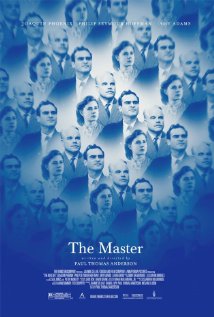
1. The Master


What more can I say about the best film of 2012? I’ve championed it since I saw it in September. Paul Thomas Anderson’s latest masterpiece is one of the most elusive, ambiguous, difficult, and vital films of the year because of the extremely powerful craftsmanship he uses and the collaborative effort of his cast and crew. Joaquin Phoenix, Philip Seymour Hoffman, Amy Adams, Mihai Malaimare, Jr., Jonny Greenwood, David Crank & Jack Fisk, and everyone else who worked on The Master deserve credit for the amazing aspects they added to the film. It is too bad that this film isn’t entirely recognized for its importance, but I guess that is what time is for—to create importance. Just ask 2001: A Space Odyssey, Citizen Kane, and Vertigo.
                                     
What does all this work add up to, though? The film observes 1950s America through the lens of a PTSD suffering (and crazy) man in Freddie Quell (Phoenix), the weird sort of faith healing and Scientology infant stage of the time in The Master himself, Lancaster Dodd (Philip Seymour Hoffman), and the role of a 50s wife, the Lady MacBeth-esque Peggy Dodd (Amy Adams).  Each character is intensely put to screen by their respective actor. There is not a more subtle performance this year than by Amy Adams. There is not a more charismatic performance than Philip Seymour Hoffman, save possible by Christoph Waltz in Django. Both performances are equally amazing, though, in that they put the characters before the actors’ ego. But when has Hoffman ever put his ego before his character? Here, he may have a career best, rivaled only by his turn as Capote. He is not a satirized figure, nor a stereotype. He is as nuanced as the rest of the cast, to Paul Thomas Anderson and his own credit. I put Waltz as my Supporting Actor of the year in my previous list, but in reality, Hoffman is just as fantastic. And finally there is Joaquin Phoenix as the scoundrel Freddie Quell. Can anyone claim as powerful of a performance this year? The answer is no. Phoenix gives a career best turn as the most lasting character of the year. No man has stuck with me as long as Quell. He is a force, unrelenting in who or what he damages, having a twisted life before the Master, and subtly (believe it or not) altered after he meets the Master. Every crevice in his face is created by the actor himself as he contorts his face into a stranger’s appearance. His walk is different. The way he talks. Even more impressive than Daniel Day Lewis as Abraham Lincoln, Joaquin Phoenix transforms into his character, never questioned, and always observed by us. While we don’t like him, per se, we can’t help but be fascinated by him. And when someone gives a brave performance like this, so soon after a highly publicized meltdown of his own, it deserves the attention.

I could go on, and on, but I already did in my complete thoughts here.  Let me just let it alone with these parting thoughts. What is the point of art? Is it merely to entertain? Or is there a bigger goal? The answer is obvious, you pick for yourself. You get to buy your movie ticket. I have chosen to use this space, Abandoned Theater, at this blog Your Personal Opinion Is Wrong to champion what I value most, and that is ambition and complete immersion into a world created by teams of filmmakers that are attempting to elevate human art to the very heights of imaginations limitations. I enjoy genre, and I enjoy high art, and really, I enjoy them equally. As long as the filmmaker does one thing: he or she is true. He or she takes chances. And he or she doesn’t fall into the pitfalls of negotiating their art for dollar signs.

There is a reason why I think Paul Thomas Anderson is the best filmmaker of his generation. He checks all the boxes.

Cheers.
read more "ABANDONDED THEATER: TJ's Top 20 Films of 2012 (10-1)"

Sunday, January 20, 2013

ABANDONED THEATER: Robby's Top 20 Films of 2012: 20-11

(Abandoned Theater is the segment of YPOIW where TJ and others (but mostly TJ) discuss another one of our great passions: film. Today however Robby is going to chime in on a two-part series of his top 20 films of 2012. Here is the first part of this list, counting down from #20 to #11. Part 2 will be up soon)

20. Django Unchained


Quentin Tarantino's mashup tale of spaghetti western-meets-blaxploitation revenge fantasy was the kind of shock to the system we always welcome from the man. After literally rewriting history in depicting his version of the downfall of the Nazi regime in 2009's masterful Inglourious Basterds, Tarantino jumps back in Django Unchained to make a "southern" where the slave is the hero. While the catharsis of seeing Jaime Foxx's title character crack a whip on a former abusive owner is certainly there, there are never any overbearing historical lessons or lectures. Instead you get a classic heroic quest of a man coming from the bottom and ending at the top; Tarantino just chose to accurately depict slavery right in the middle of it.

19. Bernie


The strangest factor about Richard Linklator's Bernie is how ambitious and complicated it turned out to be; with balancing the acted out narrative with accounts of real-life residents of the Texas town that this strange story took place, the film could've fallen apart or conceded to one side more than the other, etc. Instead Linklator does this balancing act so carefully, and the end product ended up being one of the most earnest tributes to small-town life I saw in 2012. These people and their stories were treated with the utmost care and sincerity, and on the other side of the coin, Jack Black's portrayal of Bernie Tiede brought out a quietly funny, subtle side of him that none of us have seen before. It is far and away the best work he's ever done.

18. Skyfall


There just aren't many long-running franchises that can pull off what Skyfall did. The Bond series has gone in about as many directions as you can think a spy series can; so it's nothing less than a triumph that being its 23rd installment, this film feels so fresh and so fun and so new, yet is so rooted in Bond's history and everything that makes it resonate with so many. Not only that, but Skyfall brings a vulnerability and a depth to Bond that I've not seen in far too long and that makes Daniel Craig a staple of greatness in the Bond trajectory.

17. Excision


This is just the kind of film I needed in 2012. Excision is the type of film that is twisted and warped in the best possible way. It's no surprise that John Waters is involved in the project. There aren't many films that can have me jaw-dropped in awe of the horror of a situation, while wondering if I should be laughing or not. And at the center of it all, perhaps the anchor that makes it all work, is AnnaLynne McCord's transformative performance. Excision is the great example of a director and an actor, who come across as perfectly normal people, going to the dark recesses of the soul and making art out of it. Beautiful, bloody art.

16. The Master


The Master is difficult no matter what way you look at it. Truthfully I'm still in a toss and turn about how much I really liked it, and how much I'm really rewarded for watching it. There are some elements of previous Paul Thomas Anderson works; Freddie Quell's social frustration and ticking-timebomb mentality is reminiscent of Adam Sandler's Barry Egan in Punch-Drunk Love; and Quell's relationship with Lancaster Dodd is comparable to the sometimes-friendship, most of the time-rivalry of Daniel Plainview and Eli Sunday in There Will Be Blood. But while those comparisons are there, The Master separates itself in being a staunch rebellion against structure. The Master almost acts as an ambient film; the parts are there laid out for you, but it makes no effort to give any help in assembling them. But you might find, as many viewers have, that the journey of figuring out The Master might be as savory as your destination.

15. Indie Game: The Movie


Video games are an art form. They can be as personal, soul-bearing, and born of great internal struggle as film, paintings, music, etc. That is the argument I think Indie Game: The Movie has presented by the end of it. While it's a sentiment I had already deeply believed in before I watched the film, it's so earnest and truthful and sometimes heartbreaking that I'm all the more confident to say it. Thank god for this film.

14. Seven Psychopaths


After 2008's fantastic In Bruges, writer/director Martin McDonagh makes another complex, artful film that might be too clever for its own good, but in some ways it's all the better for it. People throw around the Tarantino comparison constantly, but Seven Psychopaths reminds me just as much of a Charlie Kaufman film, in that it very much makes you think about the movies you watch and how they're constructed. While McDonagh might somewhat have the Tarantino syndrome of being in love with your own writing perhaps too much, I still think this is a beautifully executed, violent ride that's worth the occasional downfall.

13. Wreck-It Ralph


Yeah yeah yeah, I'm putting a Disney movie above Django/The Master/Skyfall/blah blah blah. Just calm down. In many ways Wreck-It Ralph is the Pixar-quality film we didn't quite get in 2012, to me; it's intensely inventive and creative in its universe and mechanisms, but its characters are so strongly and beautifully drawn out and developed, and the story so rife with complexities in its stakes and emotions it can't just be another cartoon. While Wreck-It Ralph may appeal to me with its intense video game-related knowledge and design, what moved me at the end of the day was how much I loved the characters and cared for their plights. When animated characters can feel just as real as anyone in a live action film, that's when you know there was magic there.

12. End of Watch


This was one of the biggest surprises for me in 2012. I had no clue walking into the theater that showed End of Watch that I'd be watching one of the best police films I've ever seen, and I fucking mean it. This movie is like a roller coaster from the very start, with its genius blend of incredibly realistic "found footage" style shots, with a traditional narrative. I was blindsided by this film, and I'm so happy I was.

11. Robot & Frank


Robot & Frank in many ways is a portrait of uncertainty; uncertainty of the future, of technology, of your staying power in an ever evolving world, and for Frank Langella, uncertainty of your ability to even function any more. Langella is an actor of great intensity, a factor that shines through even in one of his more understated roles. In fact perhaps Robot & Frank's greatest accomplishment is how quietly tragic Langella's Frank can be. In the process of watching him maybe we can grasp a stronger perspective about how strong our connection is, or isn't, with the world around us.

(That's it for part 1, part 2 is coming soon. In the meantime, be sure to follow Robby on Twitter @ClydeNut)
read more "ABANDONED THEATER: Robby's Top 20 Films of 2012: 20-11"

Wednesday, December 12, 2012

HEAVY FRIENDS: The Best in Heavy in 2012

(Heavy Friends is the segment where Robby tell you, yes, YOU about the latest and greatest in underground metal and hardcore. Now that list season is among us, let's look back at what Robby feels are the best albums in heavy music for 2012. Strictly in alphabetical order.)

Agalloch - Faustian Echoes
My personal choice for best EP of 2012, overall, Agalloch's latest release Faustian Echoes is an epic, 20 minute piece that is based around Johann Wolfgang von Goethe's 19th century play Faust. This two-part epic goes through just as many shifts, twists and turns as the entirety of most of Agalloch's full albums; you get your traditional black metal sounds, your folk, throw in some shoegaze, with some narration, and much more. It's one of the most creative and challenging things to come out this year, and it's a shame that it went virtually unnoticed from anyone outside hardcore Agalloch fans.

Cloudkicker - Fade
Ohio guitarist Ben Sharp has been making music under the moniker of Cloudkicker for quite some time, and he's gained a huge following in the metal community for his consistent and innovative instrumental metal releases. Sometimes that genre can lead the way to overly technical "wanky" riff fests, but Sharp knows how to make adventurous, mind-boggling compositions that blends the world of progressive metal with stuff like shoegaze and post-rock. After venturing outside the metal genre last year with a double-album release, Sharp is back with the kind of sound we're used to from him, but he keeps it from sounding old or stale. A fantastic release, through and through.

Code Orange Kids - Love is Love // Return to Dust
Code Orange Kids have garnered a large amount of popularity in only the past few months, releasing their Deathwish-backed debut just last month and going on tour supporting Gaza. Thankfully this is a great record, and a unique one; instead of playing dime-a-dozen hardcore that every local band is playing, Code Orange Kids write songs that combine hardcore with doom and sludge metal, shoegaze, and hell, you can throw in some post-rock in there too. Variety is really where this band shines brightest, but as someone who's seen their live act, they don't take fury and ferocity out of the equation to make up for it. An original young band that you need to be looking out for in the future.

Converge - All We Love We Leave Behind
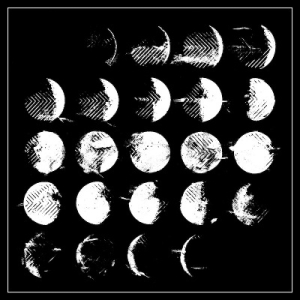
I've mentioned before how influential and essential Converge is to modern hardcore, and how deathly, solidly consistent they are. Luckily they did not falter in the slightest with their latest effort, All We Love We Leave Behind; while Converge aren't pushing their sound into any real unknown territory for them like they did in 2009's Axe to Fall, I feel even a "Converge-as-usual" record is pretty goddamn great by any account, and trumps most other hardcore records released around it. Converge just continue to show everyone who's boss, and as far as I'm concerned, there ain't nothing wrong with that.

Deathspell Omega - Drought
The mostly anonymous French black metal experimentalists known as Deathspell Omega are known for their, difficulty, shall we say? They don't make the most accessible music in the world, even in the wildly inaccessible world of black metal. And that trend continues on their latest EP Drought, though I suppose this time it's in a more digestible format. Being only six tracks and 21 minutes, the band still packs an astronomical amount of twists, turns, left hooks, surprises, and disorientation into this release. The end result is perhaps difficult, but highly memorable, and perhaps rather theatrical.

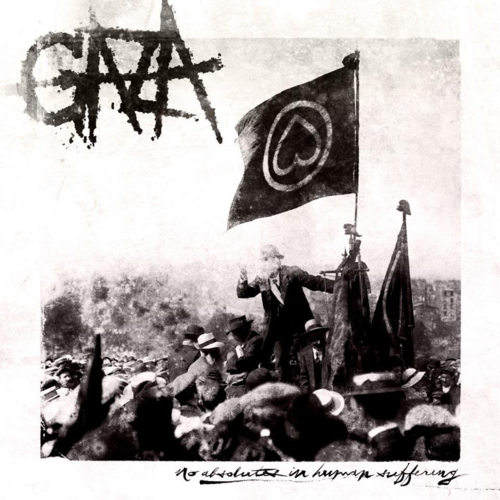
Gaza - No Absolutes in Human Suffering
Like Converge this year, Gaza don't change up their formula too much on their latest release. If anything they might've made a move to make their sound more accessible to anyone that might be turned off by their noisy, chaotic, atonal, but masterful debut I Don't Care Where I Go When I Die. But the end product is still so undeniably hard-hitting and powerful I can't get enough of it. And perhaps partial credit for that combination of accessible and irresistible is due to the production of Kurt Ballou, who I swear to god makes every record he touches better than it would be otherwise. But as relatively "accessible" as the band might be compared to their more alienating work, the band still keeps every great quality about them intact, and is sure to write new, very memorable songs that don't play deja vu too much.

High on Fire - De Vermis Mysteriis
After a disappointing 2010 effort from these guys, with lackluster production and unmemorable songwriting, High on Fire jumped back pretty damn effectively this year, and once again some credit might go to producer Kurt Ballou. So far in High on Fire's trajectory he's given the band one of the best sounds they've ever had; Matt Pike's guitar sounds thick and meaty, and the drums are pounding, resonant, and menacing. It's the best combination of all the greatness this band has.

Krallice - Years Past Matter
After being underwhelmed by this band's releases ever since its inception, I'm happy to finally be able to get behind one of their records. And this one's a doozy if there ever was one; an hour of sprawling, technical, progressive black metal that's as mind-boggling as it is all kinds of complicated. There frankly aren't many acts or albums in the black metal genre I care for anymore, and even far less in the progressive metal genre, but Krallice is a band that I say you all should be on the lookout for.

Loma Prieta - I.V.
Yes. Just yes. This is the one record on 2012 that all year I've been telling people to check out, one of the records I've listened to and loved the most throughout the year. Loma Prieta are without a doubt one of the most powerful acts in the recent new wave of screamo bands, and I.V. is all the proof you need. It's an ambitious record, an emotional record, and abrasive record, but a beautiful record all the same. I rarely find an album that's filled to the brim, almost overflowing, with this much passion and emotion, and I think if you give it a chance you can fall in love with it too.

Murder Construct - Results
And finally, the debut album from deathgrind "supergroup" (gah, I hate that term) Murder Construct, featuring members of Exhumed, Intronaut, Fetus Eaters, and perhaps the star of the show, Travis Ryan from Cattle Decapitation on vocals. He has such a unique and gritty vocal style, and it is complimented perfectly by how jagged, noisy, and filthy the sound of this music is. This is exactly the kind of feel I want in my death metal, and my grindcore; uncompromising filth and disgust. That's not to say the songs themselves don't pack a punch, but the way it's all put together, and with Ryan's vocals on top of everything, is really what makes Results a powerhouse album in my mind.

(Robby thought 2012 was a pretty damn good year for metal, and he wonders what you think of this list, or this year as a whole! Comment below or hit him up on Twitter @ClydeNut)
read more "HEAVY FRIENDS: The Best in Heavy in 2012"

Monday, September 10, 2012

Pavement Pow Wow: Our Top Ten Pavement Songs


[The Pixies are Kyle's favorite band. Pavement is Alex's favorite band. The two have fought about which influential group is superior since time began. As an interesting experiment, the two have decided to set aside their eternal hatred and list their top ten songs from each band. How will their lists compare? Read below to find out.]

Kyle Shoemaker's List


10. "Stereo" (Brighten the Corners)
My all time favorite Pavement groove to say the very least, the bass line on this track is just legendary. I always loved the way this song balances the high energy chorus with the mellow weirdness of Malkmus' vocals.

9. "Conduit for Sale!" (Slanted and Enchanted)
I'm a huge fan of the Dismemberment Plan and this song essentially laid out their formula years before they formed (if you don't believe me, go listen to Is Terrified). The rapid fire absurdist spoken word delivery of Malkmus' combined with Bob Nastanovich screaming the chorus is one of the few great pleasures in life. All the dynamics and energy of a Pixies song and all the Malkmus of a Pavement song. How can you go wrong?

8. "Gold Soundz" (Crooked Rain, Crooked Rain)
It's impossible for me to listen to this song without thinking of the excellent and strange music video where the entire band is dressed as Santa Claus and equipped with bows. Among all the lyrics that Pavement is known for, I don't think any is as noteworthy as "Because you're empty and I'm empty / and you can never quarantine the past"; it's meaning is something meant for individual pondering at 3AM and I won't attempt to do so here.

7. "Summer Babe (Winter Version)" (Slanted and Enchanted)
Is there a bigger fuck you to rock music conventions when when Malkmus laughs when saying "dropped off"? Is there any moment more quintessentially pavement than when Malkmus' utters "not here babe, TORTURE". 

6. "Shady Lane / J vs. S" (Brighten the Corners)
A genius but scatter-brained lyrical mess with one of the best pure melodies in the Pavement discography. I don't know what a "Shady Lane" is and why Malkmus wants one so bad, but I do know he should ask his god, who's god? everybody's god. I've always thought the song was Malkmus somehow pondering the fragility of life, but that's probably just the video talking. In summation I have no freaking idea what this song is about, but it's so catchy and Pavement and stuff.

5. "In the Mouth a Desert" (Slanted and Enchanted)
I'm a man of simple pleasures and the guitar tone of this song is the main reason I'm listing it this high. The dichotomy of Malkmus' pretty boy delivery and the guttural tone and distortion of the guitar makes this one of Pavement's all time greatest songs. 

4. "AT & T" (Wowee Zowee)
Nonsensical by design this song has absolutely everything I look for in a Pavement song; a great melody, bizarre lyrics with a quirky delivery, and an energetic chorus. The final moments consist of Malkmus screaming "whoa" and ending the song by repeating "the story goes", what story? your guess is as good as mine.

3. "Unfair" (Crooked Rain, Crooked Rain)
Malkmus' ultimate ode of his home state, this song manages to name drop no less than 4 cities within California while at the same time pitting the north and south against each other in a playful way. The insane imagery of "credit card in the air / swing your nachos like you just don't care" makes anyone that listens to "Unfair" want to burn the hills of Beverly just as badly as Malkmus does.

2. "Grounded" (Wowee Zowee)
The most epic song in Pavement's vast discography to say the least, the whole thing just sounds so huge. A lot of that is the post-rock influenced introduction that sounds as if it's the guide-book used for every Explosions in the Sky song ever. You're simply doing yourself a huge disservice by playing this song at anything but full volume. The actual song is some sort of condemnation about Doctors, but who cares about that with all the life-affirming going on?

1. "Elevate Me Later" (Crooked Rain, Crooked Rain)
When I was cutting down this list to 10 songs, "Elevate Me Later" was a song that very nearly didn't make my list... but the strangest thing happened. I suddenly realized in my head that the lead guitar line to this song is the first thing I hear in my head when I think of Pavement and I really didn't even associate it with any one song. When I really thought about the implications of this it was simply too strong of a feeling for me to dare place another song above it. To me music is all about memorability that will stand the test of time, and any song that I don't have to actually hear to hear in my head deserves extra special praise.

Alexander Borg's List

10. Harness Your Hopes (Brighten the Corners: Nicene Creedence Edition)
Throughout his years in Pavement, frontman Stephen Malkmus used his razor sharp wit and unmatched command of language to satirize countless subjects with the music industry being one of his favorite sparring partners. On “Harness Your Hopes,” Malkmus proves that he is just as capable of self-parody as clever satire, crafting a song excessively in his band’s signature style. Chock-full of non sequiturs, flippant rhymes every half-second, and meta references all over a fractured guitar melody, “Harness Your Hopes” stands out as an essential part of Pavement’s cannon.

9. Stereo (Brighten the Corners)
An energetic joke song about how his band is far too weird to be played on commercial radio peppered with hilarious lines “What about the voice of Geddy Lee? / How did it get so high / I wonder if he speaks like an ordinary guy?” Malkmus is at his goofy best on “Stereo.” My favorite part of the song comes from Bob Nastanovich who serves as the song’s one-man fact-checking committee, answering Malkmus’ question with an exuberant “I know him and he does!"

8. Trigger Cut/Wounded Kite at :17 (Slanted and Enchanted)
“Lies and betrayal / Fruit-covered nails / Electricity and lust” are the words that open one of Pavement’s best pop songs and although the seemingly nonsensical lyrics might seem illogical paired to a pop song, these words hold a special significance in the heart of any fan of indie rock. As Pavement’s legacy grows increasingly larger as the years go on, karaoke bars better start programming this magnificent song.

7. Frontwards (Watery, Domestic)
Who else but Stephen Joseph Malkmus could write a song that is equally rocking and introspective? The best track off the absolutely flawless Watery, Domestic EP, “Frontwards” combines guitars simultaneously melodic and noisy with the famous line “Well I’ve got style / Miles and miles / So much style that it’s wasted.” When he repeats the line for the final chorus, Malkmus alters the line to “So much style that it’s leaving.” A powerful and bleak expression of ennui  and possible self-doubt, “Frontwards” remains one of Malkmus’ most emotionally arresting songs.

6. Fin (Brighten the Corners)
While he would later prove his guitar heroism on a number of solo releases, Stephen Malkmus didn’t become a truly great guitarist until Brighten the Corners in my opinion. Borrowing the altered tunings he learned from Sonic Youth, Malkmus was a highly effective guitarist before Pavement’s most mellow album but not a great one. On the appropriately titled closer “Fin,”  Malkmus’ incredibly ear for magnificent solos is put on full display. Making use of the track’s five and a half minutes, Malkmus crafts an incredible, languid climax that shines as one of Pavement’s greatest achievements.

5. Father to a Sister of Thought (Wowee Zowee)
One of countless stylistic deviations found on the brilliantly unfocused Wowee Zowee, “Father to a Sister of Thought” could easily be mistaken for a particularly lazy Silver Jews track were it not for the distinctly Pavement lyrical and production quirks. The lackadaisical alt-country song’s saunter perfectly compliments the stoned, slacker vibe the band embodied at the time and the way Malkmus expressively professes “I’m just a man / You see who I am” never fails to get me.

4. Gold Soundz (Crooked Rain, Crooked Rain)
“Gold Soundz” earns its spot on this list for a multitude of reasons. I love the meta-textual “And they’re coming to the chorus now!” announcement Malkmus shouts, a possible cue to his coltish band. I love the ironic “z” pluralization. But most of all, I love the profound lyrics. While Malkmus might casually rattle off “So drunk in the August sun / You’re the kind of girl I like / Because you’re empty / And I’m empty / And you can never quarantine the past,” these mystical words resonant with my soul as cheesy or hyperbolic as that might sound. And for that, I thank him.

3. Range Life (Crooked Rain, Crooked Rain)
A subtle commentary of how indie and the mainstream conflict and a genuine desire to find some place to settle down, “Range Life” is an anthem or more accurately, an anti-anthem. While it lacks the size or audaciousness often associated with anthems, “Range Life” is an anthem because of its universally understandable core. Isn’t it a goal in everyone’s life to find some place that brings them peace?

2. In the Mouth a Desert (Slanted and Enchanted)
The pinnacle of Pavement’s relentless and noisy first chapter, “In the Mouth a Desert” was the song that showed me that uncompromisingly aggressive could be intelligent and lyrically complex. As Malkmus weaves an obscure lyrical tapestry, the song rises and falls in intensity. Despite its jagged aesthetic, I’ve returned to “In the Mouth a Desert” a countless number of times, each time picking up a new level of complexity.

1. Grounded (Wowee Zowee)
If it weren’t for the Beatles’ “Strawberry Fields Forever,” “Grounded” would be my favorite song of all time. I’ve devoted so much of my life to listening and analyzing music and in all that time I’ve never encountered a song that begins to rival the emotional gravitas of “Grounded.” An epic work in the truest sense of the word, the song begins in a haunting, almost post-rock fashion before entering it’s first verse where Malkmus details the life of a highly successful physician. While Malkmus focuses on the riches the doctor can afford during the verses, he punctuates each of the choruses with “Boys are dying on theses streets!” emphasizing the inescapable realities of the profession. Already stirring thanks to its incredible lyrics, the song reaches new levels of emotion when Malkmus’ guitar roars. The song is indescribably beautiful and sad, making it my favorite song from my favorite band. 
read more "Pavement Pow Wow: Our Top Ten Pavement Songs"

Monday, August 27, 2012

Pixies Pow Wow: Our Top Ten Pixies Songs


[The Pixies are Kyle's favorite band. Pavement is Alex's favorite band. The two have fought about which influential group is superior since time began. As an interesting experiment, the two have decided to set aside their eternal hatred and list their top ten songs from each band. How will their lists compare? Read below to find out and come back two weeks from now to see their Pavement lists.]

Kyle Shoemaker's List

10. “Levitate Me”
It's easy to interpret this song as a love song, but I've never thought that was entirely accurate. The titular line of “Come on Pilgrim, you know he loves you!” is a reference to Christian folksinger Larry Norman. Therefore I believe that the “elevator lady” is either god or someone who decides Black Francis' ultimate fate. As far as kicking babies goes, I honestly have no idea... I think Charles Thompson is just a born absurdist.

9. “U-Mass”
If you needed any proof that a song doesn't exactly need to have any deep meaning to be great, this is the finest example I can set forth. The Joey Santiago mini riff into explosion of noise following the final utterance of “It's Educational” may very well be my favorite moment in any one single Pixies song.

8. “Head On”
Not only is this cover of the Jesus and Mary Chain song better than the original, it's not even close. Sure Charles Thompson didn't write the melody or lyrics to this song, but his sped up arrangement and screamed vocals make this song unequivocally Pixies. The Joey Santiago guitar solo remains one of the most iconic in all of rock music and yet lasts all of 12 seconds. 

7. “Caribou”
It's fitting in a way that this song is named after a wild animal, because it's among the most animalistic and ferocious songs of their catalog. If you've ever seen live footage of this song, take a gander at Joey's strumming being faster than the human eye. 

6. "Velouria"
For my money “Velouria” is the most beautiful melody that Charles Thompson has ever written. The simplistic idea of having Kim Deal sing the individual letters of Velouria as backup is something that I'd make fun of if virtually any other band attempted it. The Pixies aren't most bands and even when they attempt things that are incredibly cheesy they somehow make it work for them. 

5. “Gouge Away”
At the beginning of Doolittle on “Debaser”, Charles Thompson is horrified by the image of a razor blade slicing an eyeball that he witnessed in Un Chien Andalou. By the end of the album he's now using the imagery of eye mutilation all over again in a completely apathetic fashion; “gouge away, stay all day, if you want to”. The thing that really sets this song apart from the majority of Pixies songs is it's atypical use of the LoudQuietLoud formula. It's one of the few instances I can recall where the chorus is the quiet part and the loud part is the verses themselves.

4. “Where Is My Mind?”
Edward Norton is talking to Helena Bonham Carter in the film Fight Club; “trust me, everything's gonna be fine”.... suddenly you see half a dozen controlled demolitions of skyscrapers in the window behind them; “you met me at a very strange time in my life”. The song playing of course is “Where Is My Mind?”, and in that moment David Fincher said everything that needed to be said.

3. “Winterlong”
Most people wouldn't put a cover of a Neil Young song as one of the best songs of another band's discography, but hear me out. While this song doesn't do anything all that different than Neil Young's fantastic original, it manages to stand as one of the Pixies' best songs because the melodies are so greatly suited to Charles and Kim. The call and response of “I waited for you, winterlong”; “you seemed to be where I belong” comprise the final 45 seconds, and the use of a fadeout has never been more appropriate. One can imagine that the song continues for eternity while the Neil Young version just ends.

2. “Hey”
I'm fairly certain that there isn't another Pixies song on my list anywhere near as minimalist as “Hey”. I can listen to Kim's bass-line in this song forever and to cover it up with any unnecessary instrumentation would simply be a crime against humanity. The very simple drum roll/fill around the 2:50 mark isn't David Lovering's finest moment from a technical standpoint, but in a “holy shit, that happened” standpoint? Hell yes. The whole song sounds as if it's an exercise in restraint to make Charles' eccentric vocals as memorable as possible, and in that regard it succeeds wildly. 

1. “I've Been Tired”
There isn't a song that better embodies the spirit of the Pixies than “I've Been Tired”. When listening to it one must ask the question “what COMPELLED them?”. It's evident to me that the Pixies had absolutely no idea what they were doing in 1987 and created incredible songs out of some bizarre force of nature that cannot be explained in any identifiable way. There is no reason a song this strange both thematically and structurally should work, but it just fucking does because it's the Pixies.

Alexander Borg's List

10. “Allison”
What makes the Pixies such a legendary band for me is their unparalleled ability to balance dichotomies. While best known for their quiet-loud dynamic formula that has been emulated by countless bands, the seminal alternative rock band also had a knack for pairing pop with hardcore, infectious melodies with tremendous ferocity. On “Alison,” the Pixies do just that, crafting a nice, little love song that satisfies both my hunger for a great melody and my desire to smash everything in my office.

9. “Dig for Fire”
One of the bounciest songs in the Pixies’ oeuvre, “Dig for Fire” is the defining track of Bossanova for me. Featuring a fantastic, undulating bassline from Kim Deal, the hard-hitting yet sparse drumming of David Lovering, and the crunchy guitars of Black Francis and Joey Santiago, the track coalesces into a sort of musical locomotive, each element creating a palpable sense of momentum.

8. “There Goes My Gun”
Give Black Francis an electric guitar and he transforms into a deranged maniac. The perfect example of this Hyde-esque transformation is the song “There Goes My Gun” off of Doolittle. Lyrically one of the most minimal Pixies songs ever written (which is saying something), the song begins with wailing feedback followed by Francis’ stentorian roar of “YOO HOO!” When a vocalist can turn the phrase “yoo hoo” into a battle cry, you know they’ve got talent.

7. “Gouge Away”
The pinnacle of the Pixie’s aggressive catalog in my opinion, “Gouge Away” is less of a song and more of an audio document of a psychopath torturing his captor. My head conjures all sorts of intricate Saw-esque imagery whenever I listen to this song indicating its sheer, violent brilliance. Already absolutely brutal, the track is made even more more sinister with Kim Deal’s alluring “la la la” at 1:00. I wouldn’t mind getting murdered to this song.

6. “Gigantic”
Despite being one of only a handful of songs penned by Kim Deal, “Gigantic” is undeniably one of the Pixies’ greatest achievements. A phenomenally catchy number bolstered by an explosive chorus, the song has a dark side (no pun intended). I’ll leave you this Wikipedia link if you’d like to uncover the song’s deeper meaning.

5. “Monkey Gone to Heaven”
A song about environmentalism, numerology, and religious salvation all in one. What earns “Monkey Gone to Heaven” its spot on this list is how the music of the song perfectly reflects its lyrics. When I imagine what “ten million pounds of sludge from New York and New Jersey” sound like, I hear Francis’ sludgy, filthy guitar tone.

4. “The Holiday Song”
A raucous number from the all killer no filler Come on Pilgrim mini-LP, “The Holiday Song” makes perfect use of a young Black Francis, featuring an all out barrage of the troubadour's most impassioned screams ever recorded. Brash in its ferocity and armed with a instantly memorable melody, “The Holiday Song” might lack the dynamism of later Pixies songs (opting for the fast and loud-faster and louder dynamic) but it’s still one of the best.

3. “Hey”
Smooth is a word not often used to describe the Pixies. This song is smooth (albeit in the Pixies sense of the word).

2. “Debaser”
To effectively capture what makes “Debaser” a terrific song and one of the greatest opening tracks of all time, I’d need to write this entire blurb with Caps lock on. Bursting at the seams with frenetic energy, not a single note is wasted on “Debaser.” Following a very brief introduction to the bassline, the song erupts with recklessly fast guitars and the best screams of Black Francis’ career. With lyrics spouting off imagery of eyeballs being sliced open, Francis screaming in Spanish, and Deal harmonizing at precisely the right moment, “Debaser” has the Pixies at their most Pixies. Fantastic.

1. “Where Is My Mind?”
Heralded as a classic for a reason, “Where Is My Mind?” has the Pixies at their best and possibly their most contemplative. With the bulk of their work concerning unidentified flying objects, Biblical violence, and sex, “Where Is My Mind?” has Black Francis questioning his lot in life, comparing his lack of place to the swimming behavior of Caribbean fish. Howls provided by Francis and Deal are constant throughout the song but are most powerful at the very when the listener hears them unaccompanied, revealing an almost mournful quality to them.
read more "Pixies Pow Wow: Our Top Ten Pixies Songs"

Saturday, August 18, 2012

LIST: Kyle's UPDATED 2012 Wishlist Pt 1


Late last year I did a 2 part feature (here and here) regarding my most anticipated albums expected to come out sometime in 2012. In said feature I gave you fine people my most anticipated releases and gave a percentage chance of success for each release.

Turns out some of those albums are extremely unlikely to come out this year and that I simply couldn't be right at predicting the future no matter how hard I tried. Seeing as it's now August and we're officially in the last half of the year I think it's worth going back and revisiting my list and seeing what I got right wrong. This is the part where you call me an indulgent cocksucker and read a funny article on Cracked instead.

---

Titus Andronicus - Local Business
Back in December I was pumped up about simply knowing this album existed, but now that a firm release date and tracklist is out it now feels much more real. Titus Andronicus' last album The Monitor has grown on me considerably and I now consider it to be a near flawless album in a lot of ways. As such my expectations for this album is the highest it's been for any album in years and I'll be disappointed if it isn't a masterpiece. I can't say without a shadow of a doubt that Titus Andronicus is going to satiate my bloodthirst for amazing, but I do know at least that we'll be getting an energetic and ambitious punk album in October... and that's probably enough. Talk me off the ledge if this isn't my Album of the Year... I'll need it. -- 90% --

---

Death Grips - NO LOVE DEEP WEB
In part 1 I jokingly proclaimed that Death Grips' debut album would be fantastic and I placed the odds of that happening at 100%. Righteous indignance aside, I wasn't really so sure if Death Grips would continue to push their sound and even less sure that the project would have any real longevity because of Zach Hill's track record. By now we all know that The Money Store did come out and that it shattered expectations for what most of us thought Death Grips were feasibly capable of. Even stranger, the thing that's happened with Death Grips is that they've become a huge buzz-band on a major label... I think it's safe to say that we as a blog were ahead of the curve on that front.  

Along comes NO LOVE DEEP WEB and I don't know what to think... the band is saying that it's more industrial, cold, and abrasive while simultaneously saying that they want Crispin Glover to collaborate with them on a video. In short, I don't know what to think and that's exactly how Death Grips wants it. --- 80% --

---

The Music Tapes - Mary's Voice
I've been obsessed with a new Music Tapes album since seeing Julian Koster perform live when the Elephant 6 Holiday Surprise Tour ran through town back in 2011. I was always a huge fan of his music, but the talent he displayed that night was simply astounding. I watched in awe as he performed no less than half a dozen different instruments and told amazing and whimsical stories. I'm a huge fan of For Clouds and Tornadoes and I think it's probably the best album to come from the entire collective that isn't In the Aeroplane Over the Sea or Dusk at Cubist Castle. The Music Tapes, more so than any other band give me a real sense of place ... they make me feel like a kid going on adventures. Julian Koster is Peter Pan in ways that Michael Jackson could only dream of... he doesn't climb trees, the dude frees Reindeer. -- 85% --


check back for parts 2 and 3 soon.
read more "LIST: Kyle's UPDATED 2012 Wishlist Pt 1 "