First check out my Honorable Mentions list and the lower half of my Top 20!
All caught up? Awesome. Let's continue.

10. Holy Motors
Holy Motors is one of the most bizarre films I have
ever seen. This French art film left me with a complicated feeling of
bewilderment and of excitement. Months later, its scenes are still firmly
planted in my memory. The accordion interlude, Kylie Minogue’s musical number,
the special effects aliens having sex, the strange sewer “leprechaun,” the
talking limousines, the driver’s mask, and the infinite ability that actor
Denis Lavant has to contort his body into different roles. Everything in this
film feels forced, but in the best possible way. It feels passionate, and runs
off the rails constantly, which is a thrilling thing to watch.
Film is
an ever evolving art medium that gains and loses fans every day. Nearly
everyone knows the feeling of going to the movies, but most people don’t view
the cinema as church. Leos Carax appears to, given the film’s lofty ambitions and
striking religious imagery. (The Madonna taming the beast, the enthralled
congregation at the beginning of the film during a film-within-the-film. The
title: Holy Motors. The last word:
“Amen.”) And it feels true to life. Tragic, hilarious, violent, irreverent,
reverent, and never boring, Holy Motors
accomplishes the impossible. It makes you think and feel deeply, instead of
just laugh and cry, which is paraphrased from something Ang Lee once said of
Ingmr Bergman’s films. This quote sticks with me, and is entirely appropriate to
Holy Motors.
My review
is here.

9. Skyfall
Academy
Award-winning Director Sam Mendes’ work (American
Beauty, Road to Perdition) on
James Bond 23, titled Skyfall, is an
unparalleled entry into the series. It is also the best action movie of the
past few years, combining impressively badass set-pieces with beautiful and
thoughtful cinematography (by the great Roger Deakins). Mendes leads a team of
talented filmmakers and actors to make pound-for-pound the most gorgeous action
movie I’ve ever seen. Each scene is shot with care, whether it is M (Judi
Dench) looking over the coffins of fallen MI6 agents/workers, or it is Bond
fighting an assassin in a Shanghai high-rise, or it is the manic Silva (Javier
Barden) having his face darkened by the night but lit up with an razed inferno
of Bond’s childhood home. This team of filmmakers doesn’t pull any punches and
never ironically tackles their action-movie/spy-movie material. They don’t have
to do any such thing, because there is plenty of artistry to be had in a big
budget film. Christopher Nolan proved this with his Dark Knight franchise. Mendes references Nolan’s films often, but
he never plagiarizes. He takes parts of Nolan’s vision of a genre film and
translates it into his own aesthetic.
Everything
about this film is fresh, yet revelatory. After leaving the theater, I felt as
if this movie needed to exist to restore a dwindling franchise. And I felt that
way when I saw it a second time, a third. Daniel Craig might be at this game
for a long time as Bond, and I’m perfectly all right with that. He’s adding a
necessary amount of grit to the 21st-Century Bond. Maybe one day it
will be necessary to camp things up again, like they were in the 70s, 80s, 90s,
for the sake of variety, but as of this moment, the trajectory of a 50 year old
franchise has never looked better.
My review
is here.

8. Beasts of the Southern Wild
In Benh
Zeitlin’s Beasts of the Southern Wild,
quiet introspection goes hand-in-hand with childlike energy. The heroine, the 5
year old Hushpuppy, played gloriously by Quvenzhane Wallis, swallows the film whole
in her performance, aided by the patronly direction by Zeitlin. The perfect
collaboration, between actor (albeit a young inexperienced firecracker like
Wallis) and a director (who is also fairly inexperienced). Her every nuance,
depicted by a then-five-year-old girl, is captured by Zeitlin and his crew,
which is a testament to filmmaking’s power. Their world, the small island south
of New Orleans, called The Bathtub, pays homage to auteurs like Terrence Malick
in its attention to nature, but it is also Zeitlin’s own creation. Scratch
that. Really, Zeitlin is the anti-auteur. He allows the world to speak for
itself, without imposing any of his own views into it. While a vocal minority
has dismissed this film as a condescending, racist depiction of a black family
in the bayou (poor, uneducated, violent father, missing parents, all told by a
young, inexperienced white writer-director) I found it honest and true to the
environment. While the story is a fable, depicting a completely unrealistic but
completely true world that could never exist in the real world, but certainly
exists on camera, it maintains a certain amount of honesty about the
impoverished areas struck by Hurricane Katrina.
What Beasts of the Southern Wild is
ultimately about is survival and honesty to one’s chosen life path. Hushpuppy
and her father live honesty, in their own way, by their own standards, and they
are folk heroes for doing as much.

7. Cloud Atlas
David and
Lana Wachowski have had an uneven career in their filmography. With the first Matrix film, they were met with acclaim,
but every film that has succeeded that undeniable science-fiction game changer
did not find the same critical (or even, at times, financial) adoration. Now
with Cloud Atlas, they have their
most divisive film yet, with even TIME magazine calling it the worst of the
year. But they couldn’t be more wrong, because the Wachowskis, working with a
third director, the talented Tom Tykwer of Run
Lola Run fame, made their best film yet. It is based off an even more impressive novel
that intertwines six seemingly unrelated stories into one epic about the theme
of inter-connectedness. The beauty of the whole film is that, for all of its
ambitions and extremism, it never has that clichéd moment where “everything
makes sense.” Instead, it trusts the audience to make the connections between
the stories, some subtle, some obvious. And many people did not make the
connections. And many people hated this film.
Many
films this year dealt with philosophy and faith, from The Grey to Life of Pi,
but Cloud Atlas dealt with it in a
very unique way. Its claim is that we all affect one another, and the greatest
achievement one can accomplish is a good deed. All religious indoctrination
aside, the truest form of goodness does not come from piety, but from general
empathy. The villains lack empathy, and the heroes contain extraordinary
amounts of it. Mixing tales of nineteenth-century slavery, early
twentieth-century European composers, cheesy 1970s spy thrillers, modern
British farces, futuristic dystopic sci-fi adventures, and distant future
post-apocalyptic adventure tales, Cloud
Atlas is a film like no other and a journey I will take over and over again
through my movie-viewing life. And while many people use the nasty and lazy
insult “pretentious,” I reply by saying that a word like pretentious is used by
the dumb to bring the ambitious and intelligent down to their level. It is one
thing to question a movie’s execution, but another to lob empty criticisms
because one truly does not understand the themes of a piece. That is on the
audience, not the three artists who made Cloud
Atlas.
Many
people hate this movie, and they have the right to, but they shouldn’t use lazy
labels like “pretentious.”
*Gets off
soapbox*
My review
is here.

And then
there is the best directed film of 2012. Ang Lee fascinatingly worked with a
story that might have been even harder to put onto the screen than Cloud Atlas in Life of Pi. To turn a philosophical, allegorical coming-of-age
story that takes place almost entirely on the open sea, in a life boat, with a
live tiger, Ang Lee had his hands full. But he pulls it off beautifully. Pi is
a fantastic character, fleshed out and empathetic. But Richard Parker, the
tiger, is as interesting and strong of a character, and to make a
realistic-looking CGI tiger that impressive of a “casting.” This isn’t a world
where CGI creatures are replacing actors, but it is certainly a world where
directors are more open-minded about how they make their films, and what they
focus on.
Ang Lee
has always been an ambitious filmmaker. He pushes himself, whether he makes a
failed attempt at a comic book movie (Hulk),
a true-to-life tale of suburbia (The Ice
Storm), a flamboyant martial arts film (Crouching
Tiger, Hidden Dragon) or a tragic love story (Brokeback Mountain). Lee exists as a storyteller who shows no
limitations to the types of stories that fascinate him or the scope of the
stories he will tell. Small, microscopic tales of two lovers or giant treatises
on God and art are both game to Lee. In Life
of Pi, that ambition, and ultimate pull off, left me impressed with Lee as
a filmmaker and touched by the story he was presenting.
The final
question of the wonderful film, if we choose to believe in God or not, extends
into a bigger idea than mere religion, and into the ultimate reason why we
exist and think and act the ways we do. The battle for our souls is not fought
between the devil and God, but by our own cynicism and the promise of a better
life. Sometimes we have to escape reality to find the truth, and in Life of Pi, that proves very true.
Are we
the survivor who lived through a terrible atrocity, or are we the tiger?
My review
is here.

5. Moonrise Kingdom
Wes
Anderson may be an acquired taste, but what a wonderful acquired taste he is. He
creates diorama-like films that amp up the quirk while dialing in the
over-seriousness. Peppered with the sort of sentiment that you have in your
grandmother’s crocheted quilt, there is something altogether lovely about
Anderson’s worlds. Whether Rushmore
or A Life Aquatic with Steve Zissou, he has created worlds that exist on
its own terms. Like a fan of Marvel comics, fans of Wes Anderson’s films eat up
their aesthetic with stocking caps and scarves.
Count me
as a fan.
With Moonrise Kingdom, Anderson has made his
best film yet. After a highly inventive, Benjamin Britten referencing opening
credits sequence, I was in awe of the craftsmanship that went behind the making
of his world. Taking place on a small New England island, Moonrise Kingdom follows the hero, a Khaki Scout named Sam (Jared
Gilman) who defects to be with the love of his life, the young Suzy (Kara
Hayward). With a supporting cast featuring the scout leader (Edward Norton),
the local police captain (Bruce Willis), two lawyers who play Suzy’s parents
(Bill Murray and Frances McDormand), a villainess aptly named Social Services
(Tilda Swinton), a fun cameo by another scout leader and all-around rapscallion
(Jason Schwartzman), and of course the narrator (Bob Balaban). Not a false note
lands through the love story between Sam and Suzy, as they run around the island
to escape all scouts, police, and parents to be with one another. Alexandre
Desplat’s lovely score, aided by a selection of great previously recorded
songs, orchestral and country-western, is the MVP in creating the wonderfully
produced world of Anderson’s New Penzance. And that is where the strength of
the film lies; it is as unrealistic as The
Avengers (and there are probably a lot of comparisons between Wes Anderson
and Joss Whedon), but Moonrise Kingdom
feels more true in spite of it all. I
could watch this film over and over again, and never grow tired of it.
I might
just do that right now. . .
My review
is a part of this mass review post here.

4. Zero Dark Thirty
Much ado
has been made of Kathryn Bigelow’s masterpiece, Zero Dark Thirty. Both a journalistic take on the assassination of
Osama Bin Laden and a feminist manifesto, intertwined perfectly, Zero Dark Thirty offers the world an
intense vision of the world we live in, and of which we understand so little. This
earth is filled with violence and antagonism, and the groups of people at war
are less defined than ever, and everyone wants to demean everyone else in the
midst of it. The United States is not in war to aid its allies against an evil
force, like they did with Hitler and the Nazis in the early 20th
century, where our heroes returned heroes. Instead cells of terrorists scarred
the United States, brainwashed its own members, and hide in the night as we
look and aim to kill for the sake of vengeance. We (Americans) rightly question
our purpose in such a war against the terrorists. Zero Dark Thirty asks questions, directed at our hearts and minds,
as to what limits we take our revenge. Torture? Assassination of Osama Bin
Laden?
The World
Trade Center attacks affected everyone in a different way. Some have obsessed
about the idea of getting back at the enemy. The protagonist of Zero Dark Thirty, Maya, played
gloriously by the incredibly talented Jessica Chastain (The Tree of Life, The Help, Take Shelter, Mama, The Debt) is a hero
defined by her work, engrossed in what she does, never stopping to smell the
roses or explain to the audience how she has to burst through the glass ceiling
in the CIA or how she misses anyone from her pre-CIA life. She is defined by
her actions, the ultimate journalistic protagonist. She carries the movie from
its infant stages of Bush-era torture to the final, half-hour long raid. She
reminds everyone throughout that she was the “motherfucker who found this
place, sir” and the men around her would be right to listen. She acts as the
beacon of hard work that it took to get the murderer who killed thousands of
Americans. And even as Seal Team Six lands in Bin Laden’s compound, and they assassinate
him, the children living there cry and whimper, and the music played by
Alexandre Desplat (Yes, who also did the music for the very different Moonrise Kingdom, and the kinda similar Argo) is completely ominous and not
gung-ho. All because of Maya’s hard work.
It is
impossible not to think about director Kathryn Bigelow in terms of Maya. She is
an Academy Award-winning director who won for another military tale, the PTSD
epic The Hurt Locker. With Zero Dark Thirty, she has faced an
impressive amount of misplaced liberal outrage by those completely
misinterpreting her film as some sort of right-wing propaganda. But it is
ludicrous to define the movie by that pre-chosen interpretation. It is much
smarter, much more powerful, much more unsettling than any limiting view that
those attacking Zero Dark Thirty have
described it. It is the sort of movie that requires introspection, questioning,
and passionate feelings. Maybe in the end the controversy is exactly the way we
should feel about this powerful movie. But to limit it to something so off-base
and basic is a criticism-crime.
Zero Dark Thirty is one of four films
deserving “Best Picture of the Year” status, with the rest of my Top 4. It is important.
It is vital. It is woman.
My review
is here.

3. Amour
Michael
Haneke is one of the 21st century’s most important directors. With Amour, Haneke might have made his best film.
There are arguments for Cache, and
especially for The White Ribbon, but
Amour sticks even more than those fantastic, important French and Austrian
films. The story in Amour this: two
upper-class, liberal, artistic French octogenarians who are in love, living in the
twilight of their lives are met with a tragedy. The wife, Anne Laurent (played
by deserved Best Actress nominee at Sunday night’s impending Oscars, Emmanuelle
Riva) has a stroke and her husband, Georges (played as well by French acting legend
Jean-Louis Trintignant), must take care of her. The entire film encompasses his
love, pain, and passion for his wife. The movie lacks the American
sentimentality, and addresses love in completely observational terms, but it
still impacts the audience in a completely devastating manner. The most
emotionally draining (and well-earned) film of the year, Amour is made by an older filmmaker, featuring older actors,
everything feels authentic. Even as the movie becomes more ambiguous at the end
of the film, featuring hallucinations and a pigeon of death, it never ceases to
feel real. With Georges feeding his wife, sitting next to his wife, changing,
yes, his wife’s diaper, due to the severity of her stroke(s), there isn’t a
moment where I wasn’t like “Jesus. . .”
Haneke,
nominated for Best Director (over more popular filmmakers like Ben Affleck and
Kathryn Bigelow), Best Original Screenplay, Best Foreign Film, and even Best
Picture at this year’s Oscars, has created a movie that speaks to the Academy,
whose members’ age is averaged at 72. This is an important movie for the
world’s elderly, but the themes of love and fear of death extend to universal
appeal. While not everyone you know, especially the squeamish, will not be able
to finish this film, not one person in the world could deny its power. Art is
powerful, and more filmmakers should take on subject matters this difficult.

2. Django Unchained
Speaking of
a difficult subject matter: American slavery!
The “other”
and probably “better” huge meta-movie of 2012, after the in-of-itself
impressive Seven Psychopaths and The Cabin in the Woods, Quentin
Tarantino’s Django Unchained is
everything you want in a Tarantino film, and at times even more. A spiritual
sibling to Inglourious Basterds, and
as good, Django Unchained is the sort
of ludicrous Tarantino movie that hits all the rights spots in comedy (and
absolutely hilarious comedy), horrors (not horror), violence (as campy as it
is), and even drama. The drama is led by Jamie Foxx, in his best role, playing
alongside Christoph Waltz, in his best role, Leonardo DiCaprio, in his best
role, and Samuel L. Jackson, in his best role. These four actors perfectly
deliver Tarantino’s unique brand of dialogue, through a spaghetti western that
finds a way to never demean the memory of those who suffered back during
slavery. He sets his story through the standard hero arch, with a protégé of an
established figure (Django played by Foxx, protégé to Dr. Schultz played by Waltz)
and has to overcome all adversity to accomplish his task (saving his wife
played by Kerry Washington from the villains played by DiCaprio and Jackson),
which becomes seemingly impossible after he loses his mentor.
You see,
Tarantino’s revenge tales (Inglourious
Basterds, Kill Bill) feature seemingly exploitative storylines of wronged
people—whether Holocaust-era Jews or women who have gone through violence at
the hands of men—who overcome all odds and win the day over those who have
wronged them—whether Nazis or abusive spouses. Tarantino sets up Django Unchained to be about how the “great
white hope” saves the slave, but in reality, Django saves himself, through his
own ability and passion, which says something about slaves that no other
Hollywood filmmaker has the balls to say. Tarantino is saying, “These people
can take care of themselves.” This is not The
Help, retold with its pretty bow, but instead a messy story of a black man
freeing himself.
My review
is here.

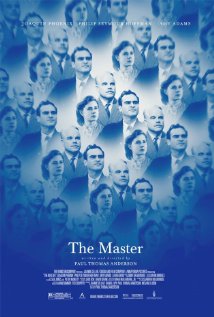
1. The Master
What more
can I say about the best film of 2012? I’ve championed it since I saw it in
September. Paul Thomas Anderson’s latest masterpiece is one of the most elusive,
ambiguous, difficult, and vital films of the year because of the extremely
powerful craftsmanship he uses and the collaborative effort of his cast and
crew. Joaquin Phoenix, Philip Seymour Hoffman, Amy Adams, Mihai Malaimare, Jr.,
Jonny Greenwood, David Crank & Jack Fisk, and everyone else who worked on The Master deserve credit for the
amazing aspects they added to the film. It is too bad that this film isn’t
entirely recognized for its importance, but I guess that is what time is for—to
create importance. Just ask 2001: A Space
Odyssey, Citizen Kane, and Vertigo.
What does
all this work add up to, though? The film observes 1950s America through the lens
of a PTSD suffering (and crazy) man in Freddie Quell (Phoenix), the weird sort
of faith healing and Scientology infant stage of the time in The Master himself,
Lancaster Dodd (Philip Seymour Hoffman), and the role of a 50s wife, the Lady
MacBeth-esque Peggy Dodd (Amy Adams). Each
character is intensely put to screen by their respective actor. There is not a
more subtle performance this year than by Amy Adams. There is not a more
charismatic performance than Philip Seymour Hoffman, save possible by Christoph
Waltz in Django. Both performances
are equally amazing, though, in that they put the characters before the actors’
ego. But when has Hoffman ever put his ego before his character? Here, he may
have a career best, rivaled only by his turn as Capote. He is not a satirized
figure, nor a stereotype. He is as nuanced as the rest of the cast, to Paul Thomas
Anderson and his own credit. I put Waltz as my Supporting Actor of the year in
my previous list, but in reality, Hoffman is just as fantastic. And finally
there is Joaquin Phoenix as the scoundrel Freddie Quell. Can anyone claim as
powerful of a performance this year? The answer is no. Phoenix gives a career
best turn as the most lasting character of the year. No man has stuck with me
as long as Quell. He is a force, unrelenting in who or what he damages, having
a twisted life before the Master, and subtly (believe it or not) altered after
he meets the Master. Every crevice in his face is created by the actor himself
as he contorts his face into a stranger’s appearance. His walk is different.
The way he talks. Even more impressive than Daniel Day Lewis as Abraham
Lincoln, Joaquin Phoenix transforms into his character, never questioned, and
always observed by us. While we don’t like him, per se, we can’t help but be
fascinated by him. And when someone gives a brave performance like this, so
soon after a highly publicized meltdown of his own, it deserves the attention.
I could
go on, and on, but I already did in my complete thoughts here. Let me just let it alone with these parting thoughts. What is the point of art?
Is it merely to entertain? Or is there a bigger goal? The answer is obvious, you
pick for yourself. You get to buy your movie ticket. I have chosen to use this
space, Abandoned Theater, at this
blog Your Personal Opinion Is Wrong
to champion what I value most, and that is ambition and complete immersion into
a world created by teams of filmmakers that are attempting to elevate human art
to the very heights of imaginations limitations. I enjoy genre, and I enjoy
high art, and really, I enjoy them equally. As long as the filmmaker does one
thing: he or she is true. He or she takes chances. And he or she doesn’t fall
into the pitfalls of negotiating their art for dollar signs.
There is
a reason why I think Paul Thomas Anderson is the best filmmaker of his generation.
He checks all the boxes.
Cheers.