By Danny Spiteri.
Radiohead have become known for their commitment to constant reinvention, assuming multiple distinct sonic identities over the course of their career. The most drastic shift they have undergone, of course, is their transition from primarily rock instrumentation to an electronic foundation between 1997’s wildly successful OK Computer and 2000’s similarly lauded Kid A. Since then, the band has continued to explore different angles of their electronic influence, allowing it to manifest itself to varying degrees throughout each entry in their discography. The artists who inform the group’s sound tend to be put under the always evolving umbrella of IDM, the loose blanket term used to describe electronic artists too expansive to be labeled with a more specific subgenre but too grounded to be called strictly “experimental.” Frontman Thom Yorke has expressed a particularly significant amount of interest in the genre, even releasing his own solo record of IDM-pop hybrids in 2006 with The Eraser. His involvement in the scene has become progressively higher lately, with collaborations with Burial, Four Tet, Flying Lotus, and Modeselektor; the release of a two-disc remix album of the band’s latest LP, which employed many of alternative electronic music’s biggest names; and cameos at Los Angeles’ Low End Theory club each occurring over the course of the past two years. Concurrently, the movement has experienced its own changes, with today’s Flying Lotus and Actress bearing little resemblance to yesterday’s Aphex Twin and Boards of Canada. With this in mind, it is not difficult to understand Thom Yorke’s association with it; he is not one to be satisfied with stagnation, and IDM is hardly a fixed term, instead continuing to offer a relatively consistent stream of forward-moving ideas.
Thom’s latest outing involves a fairly new project, one which has existed since late 2009, but is only now releasing its debut full-length LP. Atoms for Peace names longtime Radiohead collaborator Nigel Godrich, Red Hot Chili Peppers bassist Flea, drummer Joey Waronker, and Brazilian percussionist Mauro Refosco as its members, and yet, though they should not be discredited, it feels largely like Thom Yorke’s vision. In concept, Amok is not very far removed from The Eraser, pairing Thom’s ghostly, often chopped vocals with calculated IDM production. It feels very much like a product of his interest in that genre, allowing him to express it more directly than he has perhaps been able to in Radiohead. The unfortunate truth of Amok is that it eschews the sense of exploration that makes IDM so revitalizing. Like its black-and-white cover art, it feels like a coloring book that has not been colored in; the framework for interesting instrumentals is there, but the sounds which comprise it are too inherently safe and lacking in personality to be memorable on their own. Whereas Radiohead succeeds by incorporating their influences in such a way that elevates them to feel like logical elements of the band’s unique identity, Atoms for Peace’s music seems like little more than a simplified summary of a genre.
Generally underwhelming sound aside, Amok does have a small handful of sonic flairs under its belt. Flea’s bass lines, though never especially prominent, are appropriately melodic, providing especially engaging lines on tracks like “Stuck Together Pieces” and “Before Your Very Eyes.” The percussion also asserts fittingly dense rhythms, which are complemented particularly well by the tastefully executed odd time signatures of “Judge, Jury and Executioner” and “Dropped.” The sounds, albeit generic, are certainly well-crafted and pleasant despite being generally unadventurous. There are also the occasional exceptions, such as the uneasy synth lead of “Ingenue” and the buzzing atmospherics near the end of “Reverse Running.”
Thom Yorke’s voice is another notable asset to Amok. His haunting falsetto is an excellent counterpart to the record’s cold electronics, adding to its eerie atmosphere and lending it direction. Among his voice’s most effective uses are those in which it takes a backseat to its surroundings, such as the wordless harmonies which begin around the middle of “Unless” and the supporting parts on “Reverse Running.” Between moments like these and those which feature his vocals in a lead role, Thom proves his versatility and malleability as a vocalist. Less consistently appealing, however, is this album’s songwriting. Oftentimes, the vocal melodies feel impersonal, leaving some of these songs to feel simply like exercises in tame experimentation rather than relatable compositions. There are plenty of moments which do more to connect on this level, such as “Ingenue,” “Reverse Running,” and “Default,” which each possess relatively strong melodies and moving progressions, but deep emotional resonance is fleeting.
Atoms for Peace is a project with potential, for Thom Yorke certainly bears a number of fascinating influences, and it is no secret that the man has enjoyed heaps of success in Radiohead. However, the ambition of his work in that band, as well as that of his inspirations, fails to match the rich possibilities brought on by his well-deserved stature. Although Amok is certainly competent, ranging from decent to very impressive throughout its nine tracks, it never quite takes the sort of risk that could elevate it further. It feels as if Thom Yorke has gathered a handful of other talented artists to carry out a vision that lives within the confines of his comfort zone, and while that is a fairly appealing place to be, it ultimately offers nothing essential to the current musical landscape.
Score: Light 7/10
- Danny
(I liked this album, but I didn't love it. By the laws of being a music fan, does not loving any album made by Thom Yorke qualify as treachery? If so, feel free to prosecute me on Tumblr.)
In which Alex returns from his music journalism exile and tells the guys about what he learned in his time away. The guys also have a lengthy discussion about the new My Bloody Valentine album, yes the one that came out in 2013. They finish this beast off with some discussion on exciting upcoming albums.
To hear this episode please look for YPOIW on iTunes (please rate and subscribe!). If you prefer a direct download one is available here.
Hello, everyone! I am taking a break from my usual music-related writings to step in on YPOIW's Abandoned Theater segment, which, as the title suggests, focuses on films. This is a list of my top twenty favorite films of 2012 along with very brief blurbs for the top ten. Thanks for reading! - Danny Spiteri
20. Jeff, Who Lives at Home
19. The Secret World of Arrietty
18. The Dark Knight Rises
17. Django Unchained
16. Bernie
15. Argo
14. Silver Linings Playbook
13. This is 40
12. Amour
11. Wreck-it Ralph
10. Paranorman
The makers of 2009's exceptional Coraline return with Paranorman,
a well-intentioned depiction of misunderstood children that also serves
as an immaculately animated and genuinely humorous film for all ages.
9. Skyfall
Sam Mendes brings a fresh voice to the admirably
durable James Bond franchise, employing magnificent cinematography and
top-notch contributions from actors both fresh and familiar to the
series to create what is by far one of the best Bond films to date.
8. Cloud Atlas
Although it doesn't execute its thematically dense plot quite as coherently as it could, Cloud Atlas is nevertheless an enthralling, memorable film that mostly realizes its ambition.
7. Looper
Looper
is a stylish tech-noir film that succeeds both as a thrilling action
movie with an engaging plot and exciting sequences and as a
demonstration of how desire can eventually corrupt a person.
6. The Perks of Being a Wallflower
From a distance, The Perks of Being a Wallflower could seem like a generic entry in the indie teen movie genre, but rather, the film transcends its clichés with irresistibly charming performances and emotionally resonant themes.
5. Seven Psychopaths
Martin McDonagh's followup to 2008's In Bruges
is a witty piece of satire that smartly makes commentary on Hollywood
films, also utilizing its all-star cast to great comedic effect.
4. Beasts of the Southern Wild
An aesthetically beautiful, exceptionally paced coming-of-age story, Beasts of the Southern Wild
is not only a promising debut from director Benh Zeitlin, but also an
excellent showcase for young lead actress Quvenzhané Wallis' stunning
performance.
3. Holy Motors
Parallels between "the stage" and "real life" have been drawn before, but Holy Motors expresses them via a highly surreal and bizarre lens, comparing the cinema to reality in a thought-provoking and surprisingly relatable fashion.
2. The Master
Never shortchanging its expertly developed characters, The Master
is an intricate exploration of faith, loneliness, and the often confused search for fulfillment, featuring
superb performances from Joaquin Phoenix, Philip Seymour Hoffman, and
Amy Adams, as well as typically masterful direction from one of modern
cinema's most respectable names, Paul Thomas Anderson.
1. Moonrise Kingdom
Wes Anderson has been fine-tuning his
signature style of quirky indie film making over the course of his
filmography, arriving at what is arguably his finest film yet with Moonrise Kingdom, a gorgeously framed, tastefully heartwarming, and appropriately funny tale of love between two outsider-esque children.
Currently, electronic music can be roughly divided into two categories:
that which encompasses the dance-oriented bangers aimed for the club,
and the "thinker's" music, or that which is best suited for the
headphones. There is certainly some overlap between the two, but for the
most part, they are distinctly separate, with some broader subgenres
boasting microgenres in both sides. One of the most polarized examples
is dubstep, which simultaneously holds some of the most critically
acclaimed music of the last decade and some of the most universally
panned. Such a split did not exist at the inception of the genre, at
which time it was a relatively straightforward fusion of ideas from dub,
UK garage, grime, and drum & bass. As the years progressed,
however, various artists began to push it forward, some opting for a
relatively experimental approach, and others exploiting its potential on
the dance floor; thus, the split was born. 2007 saw the release of
Burial's Untrue, a bleak yet sonically rich expression of
loneliness that utilized pitch-shifted R&B vocal samples and
skittery percussion to spawn a sibling of dubstep known as future
garage. Not long afterward, a much more commercially appealing form of
dubstep emerged, establishing a formula that relies on bombastic "bass
drops" to create something referred to somewhat derogatorily as
"brostep." What started out as just another club trend became a
seemingly ubiquitous craze, not only existing within the confines of
electronic dance music, but also heavily influencing genres ranging from radio pop to nu metal. It became the face
of dubstep to people not very well-versed in its history, catalyzing
arguments about what "real dubstep" is, which are conveniently available
for your viewing pleasure throughout the comments on YouTube videos of
various dubstep songs. Today, members of the post-Burial camp tend to
despise its more rave-friendly rival, and those in the "brostep" crowd
typically are simply unaware of the former's existence.
Skrillex, a.k.a. Sonny Moore, former singer of emo-pop band From
First to Last, is at the forefront of that more mainstream-friendly
movement; consequently, music nerds love to hate him. The reasons for
this stigma aren't always clear, nor are they always fair. "Brostep" as a
whole generally suffers from tacky sounds and an uninspired formula
that follows as such: set up faux-euphoric build-ups, pay off with a
sensory overload comprised of oscillating bass lines and heavy
percussion (i.e. "the drop"), ride out the beat with aimless electronic
wankery, then repeat. Skrillex, though not exactly putting forth
groundbreaking structures, doesn't completely adhere to this recipe. His
music isn't devoid of the aforementioned components, but he seems to at
least attempt to break the monotony bore by most of his peers,
incorporating various types of electro house into his relatively
inclusive style. He is also more melodically inclined than many of his
compositionally crippled contemporaries, occasionally stumbling across
surprisingly potent melodies, such as that which leads the title track
on the Scary Monsters and Nice Sprites EP. Compliments aside, however, this isn't your typical "everyone hates Skrillex, but he's really not that bad!" review.
The talent Skrillex does wield is one of his most frustrating
traits, for it shows that the producer does have the ability to make
more interesting music than that which is already under his belt. His
production chops are a noticeable hair above those of his competitors,
and yet he still resorts to the cheap sounds by which such artists
swear. Even when he does write effective melodies, he counterbalances
them with overblown instrumentation that doesn't utilize nearly enough
well-crafted textures to justify its maximalism. Although he does
sometimes implement enough contrast in volume to give his music a
semblance of direction, too often does incessant over-stimulation of
sounds squash the dynamic, resulting in a listening experience that is
far more exhausting than it is liberating. As if attempting to debunk these criticisms, Skrillex demonstrates an evident stylistic shift on his latest offering, Leaving EP.
Its first two-thirds don't venture wildly far from the producer's
comfort zone, but the closing title track bears an unlikely yet obvious
influence: Burial. The percussion which opens the track is deep, dark,
and less
rhythmically straightforward than anything one would expect from the the
producer, and the overhanging synthesizers that are introduced next
work to paint a cerebral atmosphere rather than to galvanize the
listener. Leading the song is a chopped vocal sample that is
pitch-shifted in a way that re-purposes its melody, perhaps the most
blatant nod to Burial yet. With the addition of light piano chords and
interwoven strings later on, it is clear that "Leaving" represents
Skrillex deliberately at his most refined yet.
The song's heart is certainly in a good place; its execution,
however, is not nearly as impressive as that of the music after which
Skrillex models it. The drums are decidedly more intricately laid out
than those in his prior material, but sonically, they are hardly
fine-tuned, taking on a flat and nondescript quality. These simple,
generic timbres plague the song's other components as well, whether it
be the lazily produced electronics or forgettable vocal clips. Credit is
due for being somewhat tastefully dynamic, however, and at times, its
marginally pretty sounds and tender melodic approach allows it to be
mildly affecting. Ultimately, it's a decent song, but its textures are
not nearly detailed enough, nor is its composition memorable enough, to
feel like anything more than a severely watered down rendition of
Burial's music.
The other two tracks are closer to standard Skrillex fare, though
not among his most obnoxious work. "Scary Bolly Dub" is essentially a
dub version of "Scary Monsters and Nice Sprites." The sounds are
characteristically poor and its organization is messy, but it does have
the saving grace of the original's strong lead melody to keep it from
being an abject failure. Opener "The Reason" is in many ways the
midpoint between the EP's other two tracks, particularly in the subtlety
of its demeanor. It features a vocal sample which isn't terribly
different from that of "Leaving," but this clip's function is dissimilar
in the context of the track's more urgent elements. There are also no
"drops," yet the drums are still notably hard-hitting. Still, with its
exclusion of many of Skrillex's most annoying techniques, "The Reason,"
though not exactly moving, is never awful.
Whether as an attempt to raise an appreciation for more introverted
dubstep in Skrillex's fan base or to demolish the anti-Skrillex
mentality in more critical music listeners, Leaving EP is too
middle-of-the-road to be completely successful. Although the EP may
strike non-fans as the most palatable entry in Skrillex's discography,
particularly the title track, it also too clearly exposes his
limitations as both a producer and artist. It's far from being wholly
offensive, but it also fails to carve out any sort of important niche in
the current electronic music landscape. Skrillex feels most assured
when he commits to his signature hyperactive form of dance music. As
easy as it is for Burial fanatics to deride the musician's definitive
work, it is also difficult to ignore his success. Skrillex understands
his crowd and how to create music that stimulates them, which is
certainly respectable; I am simply not a member of that crowd.
Score: Strong 5
(Was I not harsh enough on Skrillex? Am I being too fair? Please let me know on Tumblr.)
Recommended by Danny Spiteri.
Before I begin, I'd like to communicate just how much Flying Lotus's music means to me. My introduction to him came about via late night television block Adult Swim, who often uses his music as the soundtrack to the bumpers they air between shows and commercials. It was 2008, shortly after his Los Angeles LP was released, and at fourteen years old, I was but a budding music nerd, ignorant to the wider world of independent music outside of a small handful of artists to whom I devoted my fanaticism. The existence of the blogosphere was completely unbeknownst to me, so I relied on a limited set of sources to discover music, one of the most pivotal being Adult Swim. My foray into their repertoire, which was aided heavily by this website's extensive archival, opened me up to a wide array of electronic and hip hop artists, spanning the rosters of a handful of established independent labels. The most notable of which was Warp Records, home to electronic music pioneers such as Boards of Canada, Aphex Twin, Autechre, Squarepusher, Prefuse 73, Clark, and of course, Flying Lotus. My newfound fascination with these artists marked two landmark changes I made in my listening habits: expanding my focus to a wide variety of artists rather than obsessing over a few, and allowing independent electronic music to become my genre of choice. And yet, in spite of my enlarged attention span, I found it difficult not to obsess over Flying Lotus, the artist most responsible for sparking this transition in me. His strikingly original and experimental yet emotionally relatable approach to electronic music made a profound impact on me then, and it continues to resonate with me today. He is my favorite artist of all time, and accordingly, there will be an inevitable strain of bias running throughout this review.
Steven Ellison has been releasing full-length albums as Flying Lotus on a two year clock since 2006, birth year of his debut for Plug Research, 1983. Comparatively to the albums that would follow, 1983 was somewhat embryonic. Not quite as distinctive or sonically dense as the producer's definitive work, it also is currently his shortest and most disjointed LP, often feeling like a canvas for him to toy with his influences without fully developing his ideas. Despite that, 1983 is still a great record, housing some of Flying Lotus's most captivating songs, such as the melodically potent title track and the Tito Puente-sampling "Unexpected Delight," which features the vocal talents of common FlyLo guest Laura Darlington, and laying the foundation for what would evolve into a more multifaceted, unparalleled sound.
It was Flying Lotus's next full-length excursion, Los Angeles, that catapulted him to transcendent levels. With its astonishingly intricate layering, top-notch production, stimulating off-kilter rhythms, imaginative sampling, emotionally affecting composition, and cohesive presentation, Los Angeles is nothing short of a masterpiece in my own eyes. From the shimmering synthesizers that open with "Brainfeeder" to the heated percussive exercise of "Melt!," from the upbeat and danceable "Parisian Goldfish" to the gorgeously minimal beauty of closer and Laura Darlington feature "Auntie's Lock/Infinitum," and throughout everything in between, Los Angeles gracefully exhibits a wide range in creative perspective, nailing a wealth of brilliant ideas with staggering precision. Although I don't deny the possibility of FlyLo releasing something that removes it from this perch, it now stands firmly as my favorite release in the Flying Lotus discography.
Whereas Los Angeles was Flying Lotus's breakthrough record, 2010's Cosmogramma is his most popular. Arguably more ambitious than its predecessor, Cosmogramma marked the introduction of FlyLo's incorporation of heavy influences from the world of jazz. His addition of Stephen Bruner, a.k.a. Thundercat, as a frequent collaborator factored in highly melodic bass lines, which worked in conjunction with the chords Flying Lotus was borrowing from jazz. The electronic nature of his music was still at its core, however, often taking on an even more maximalistic form than his previous work, such as with tracks like the abrupt opener "Clock Catcher" and the cinematic "Galaxy in Janaki." I find Cosmogramma to be slightly less consistent than Los Angeles, but it also reaches highs that are among the highest Flying Lotus has ever achieved, including the somewhat celebratory "Computer Face // Pure Being," the danceable "Do the Astral Plane" and the thrilling build its string and horn section help execute, the continuation of winning Laura Darlington contributions in "Table Tennis," and the euphoric finish of the aforementioned "Galaxy in Janaki."
Until the Quiet Comes is only Flying Lotus's fourth LP, but considering the multitude of EPs, demos, bootlegs, and mixes he has under his belt, it's far from being his fourth statement. His earliest demos, such as July Heat and Demo 06, were not particularly challenging, and yet despite not doing much to distinguish themselves from other post-J Dilla instrumental hip hop, they were still among the most interesting of such peers. 2007's Reset EP was a moderately moody, wonderful precursor to Los Angeles that packaged some of his most powerful work, particularly the breathtaking "Massage Situation." The L.A. EP trilogy that followed Los Angeles featured both original material that functioned as an excellent afterthought to the LP and remixes from other artists that offered it refreshing new perspectives. Between the first and second of those EPs came Shhh!, a collection of six reinterpretations of songs ranging from Madvillain's "Shadows of Tomorrow" to Nelly Furtado and Timbaland's "Promiscuous." The Pattern+Grid World EP that followed Cosmogramma is FlyLo's most frantic release yet, producing some of his most stimulating moments with highlights like the 8-bit exploration "Kill Your Co-Workers" and the driving "Physics for Everyone!" This is all in addition to a wealth of other singles, demos, and unofficially released material that rest under FlyLo's belt, most of which range from solid to incredible, and almost always carrying the sonic qualities that make his music so distinguishable.
After a quiet 2011, Flying Lotus has returned with Until the Quiet Comes, the full-length successor to Cosmogramma. Following such an album is a difficult task for a number reasons. Of course, the overwhelmingly positive reception of Cosmogramma creates heightened expectations around subsequent material, which places even more importance on the display of progression between releases. Considering the voluminous form that record took on, it seems that FlyLo's only choice in making his next move was to head in a more subdued direction. Until the Quiet Comes is still denser than much contemporary electronic music, but unlike with past material, its sonic focus is centered less around barrages of sound and more around smooth, pretty textures. Paring back volume doesn't come at a cost of personality, fortunately, for Flying Lotus's penchant for exploration keeps the album feeling like new ground for the artist. Although atmosphere has always been a crucial element of FlyLo's music, taking a relatively soft approach allows him to bring forth his often latent ambient side, at times surpassing the standards set by most of his previous flirtations with predominantly atmosphere-driven work. The brief yet stunningly beautiful "Until the Colours Come," for example, could be compared to Los Angeles cut "Orbit 405" or perhaps Cosmogramma piece "Intro / A Cosmic Drama" in their similar track lengths and absence of percussion, but the former, though it does function well as an interlude, also succeeds not only as a standalone track, but as one of the most affecting on the LP as well.
This emphasis on space carries over into most of the percussive songs, but although the sounds are consistently magnificent, the songs themselves produce somewhat mixed results. Structurally speaking, a portion of these tracks plateau early, shifting different components without a particularly strong sense of direction. Both "All the Secrets" and opener "All In" hold impressive shares of interesting ideas, but they also meander in a way that prevents their potential from being fully realized. Lack of clear aim in such tracks is a minor issue when considering that the bulk of the record was constructed to act primarily as a series of mood pieces, though the few "bangers" that appear also suffer slightly from underwhelming form. The most notable example is "The Nightcaller," which both in vibe and placement on the album's timeline recall Los Angeles's "Parisian Goldfish" and Cosmogramma's "Do the Astral Plane" without approaching the jubilant emotional heights of either. The other two relatively urgent tracks, "Sultan's Request" and "Putty Boy Strut," are more successful, the former on the strength of its thick bass and immediate melodies, and the latter by way of its infectious vocal samples, though they do feel just slightly undercooked. This less defined manner of arrangement bothers me less as I become more comfortable accepting that Until the Quiet Comes isn't a linear extension of preceding Flying Lotus material, but I still can't help but feel that a handful of these songs could use more developed structures.
A few of the lead melodies are alienating as well, particularly those contributed by certain guest vocalists. Thom Yorke feature "Electric Candyman" is one of the most cerebral songs Until the Quiet Comes has to offer, and in contrast to his appearance on Cosmogramma's "...And the World Laughs With You," places his vocals in a comparatively obscure place. While his ghostly voice and the treatment Flying Lotus applies to it works especially well with the song's creeping aura, the notes he sings don't add up to anything markedly striking. Similarly abstract is the first half of the following track, the Niki Randa collaboration "Hunger," which could benefit from a sharpened melody, though it ultimately does succeed on the strength of the mind-bending soundscape it creates. The only real pothole on the record is "See Thru to U," which gives Erykah Badu the spotlight as lead vocalist. Although I appreciate Erykah Badu for her understated yet passionate delivery, I find her melodies on that track to be almost completely inconsequential. Backed by appealing organic percussion that drowns at the hand of a messy instrumental, "See Thru to U," though not remotely offensive, feels like a sacrificed opportunity at what could have been an exceptional pairing. Moments like these are far from destroying the album, but they do show that occasionally, FlyLo's music could profit from more grounded songwriting.
Despite sometimes being too abstract for its own good, Flying Lotus's adventurous composition ends up being one of the most admirable aspects of Until the Quiet Comes. As his music continues to inspire an increasingly large generation of copycats, FlyLo seems to venture further into experimentation with unusual chord progressions and melodies, which is one of the main facets of his music that keeps him standing out from his contemporaries. It may not always connect emotionally on this LP, but it does so more often than not, frequently with astonishing results. The superb "Heave(n)" excels by way of its alluring vocal sample and blissful aesthetic, and the following "Tiny Tortures" effectively juxtaposes calming instrumentation against an uncommonly heavy kick drum. "Only if You Wanna" begins as one of the most straightforward examples of beat music on the record, providing one of its most physically engaging moments before descending into a brief jazz exercise that foreshadows the run of more dreamlike songs that comes afterward. Undoubtedly one of the album's most prime examples of compositional success is the second half of the previously mentioned "Hunger," a piece set in 7/8 that builds airy vocals and strings upon an arresting duet between bass guitar and something that vaguely resembles an electronically manipulated acoustic guitar. Moments like these go to show that when FlyLo's music utilizes the right amount of discipline, the result can be stimulating on a number of levels.
Aforementioned missteps aside, the guest spots on Until the Quiet Comes are generally efficacious as well. Renewing his role on Cosmogramma, Thundercat does double duty as both bassist and occasional vocalist. His flavorful, melodic bass lines are an essential cornerstone of a bulk of the LP, even going as far as to be the primary driving force behind songs like the standout title track. His sole vocal feature, "DMT Song," accurately represents its subject matter with a dreamy state that makes most current dream pop feel plastic in comparison, an effect that is achieved largely by his soft, boyish voice. Additionally, newcomer Niki Randa delivers two strong performances, especially on the haunting "Getting There." Laura Darlington excels as usual, contributing an eerie melody that works effectively alongside the song's mysterious aura. Each guest musician adds a significant element to the album without ruining its cohesion or causing it to feel like anything but FlyLo's own statement, which serves as a testament to his nearly impeccable taste in collaborators. Until the Quiet Comes reaches its peak as it approaches its final few minutes with "Me Yesterday // Corded." As its title suggests, the song is divided into two halves, which are linked smoothly despite being distinctly different; the second strikes me as being clearly the strongest, though the first half also offers a fair share of quality. Wistful playing from what sounds like slightly muffled keyboards open the track, and soon after are joined by a somewhat sparse beat and altered vocals that remind me faintly of parts of the Nicolas Jaar EP that came out last year. The second half kicks off just after the two-minute mark with a relatively straightforward yet still off-kilter beat, simple yet well-chosen chord progression, and minimal yet powerful plinking melody. Over the course of the next two and a half minutes, Flying Lotus builds the piece into a cathartic powerhouse, introducing characteristically melodic bass lines from Thundercat, complementary vocal samples, and his signature "laser" sounds, all in addition to a variety of other sonic ornaments. In a way, this song is a culmination of the album's assets, showcasing both the experimental and emotional sides of his composition, representing both his electronic and organic sides at their finest, and utilizing his mass of typically intriguing sounds to create one of his most gripping sonic landscapes yet. FlyLo has a history of choosing strong closers (see "Auntie's Lock / Infinitum," "Galaxy in Janaki"), and although "Me Yesterday // Corded" technically isn't one, it feels properly conclusive. This is not to neglect "Dream to Me," however, a short yet delightful piece that feels appropriately reflective, concluding with finesse the colorful journey the record takes throughout its 48 minutes.
The context of my life has certainly changed drastically since I first became a Flying Lotus fan. I am no longer struggling to find sources of new music, nor am I as wide-eyed and naive in regards to the music world, and my sensibilities as a music fan have extended far beyond my then almost exclusive diet of independent electronic music. Flying Lotus's music has changed discernibly as well, and yet throughout the arc it has made, it has retained the originality and devotion to pushing boundaries that drew me to it in the first place. Until the Quiet Comes may not always strike an emotional chord with me, but it's loyalty to these qualities renders it a consistently enthralling experience nevertheless, and as previous FlyLo albums have, it feels like a singular phenomenon that never veers too closely to the already established ideas of others. In many ways, Flying Lotus is at the head of his generation, transcending waves of faceless imitators with his own pronounced personality traits, and eluding the confines of in-the-moment trends by setting his own. He is my favorite artist of all time, and bias accounted for, I'd be hard pressed to name many others who have as many truly substantial things to say.
Score: Decent to Strong 8 (Do you appreciate Flying Lotus as much as I do? More? Not even close? I've all but abandoned my Twitter, but feel free to let me know on Tumblr!)
On this week's episode of the podcast we've got a full house and a new Flying Lotus album to talk about. Unfortunately for FlyLo, he couldn't escape the wrath of Panny Spiteri. #pray4music
To hear this week's episode please look for YPOIW on iTunes (please rate and subscribe). If you're the type who prefers a direct link, or just a Flying Lotus apologist that doesn't want your friends to know how much you really hate him... please click here.
Recommended by Danny Spiteri.
It is difficult not to admire Phil Elverum's long-standing consistency. Over a decade has passed since the inception of the Washington-based singer/songwriter's breakthrough project, The Microphones, yet his track record has suffered few missteps, and not due to the absence of risks. Sure, Phil's signature brand of gloomy, analog-recorded indie folk has remained at the base of his music throughout these years, but his openness to the influence of normally unassociated genres has lent it a dynamic level of uniqueness.
This acceptance began clearly manifesting itself on The Microphones' first widely noted album, It Was Hot, We Stayed in the Water, which was the first to advance the project's former lo-fi noise pop formula in favor of a more distinctive sound. The release saw Phil integrating grainy folk styling into the fuzzy guitar rock and tape experiments of his previous albums, allowing acoustic sounds to take the front seat. The Glow Pt. 2, The Microphones' 2001 LP, is understandably considered by many to be the pinnacle of Phil's work, developing the aesthetic introduced on It Was Hot, We Stayed in the Water into a sprawling, dense opus. Its followup, 2003's Mount Eerie, was a departing statement of sorts for The Microphones. By way of five songs varying from average lengths to one that exceeds seventeen minutes, Phil crafted a story depicting his own death and subsequent encounter with the Universe, resulting in an ambitious epic that supplied proper closure to his roles both as the band's protagonist and its creative mastermind. With the exception of one live release, Mount Eerie was the final album to be released under the The Microphones moniker, signifying the transition into the project's next incarnation, Mount Eerie.
By no means did Mount Eerie abandon The Microphones' sound completely, but it nonetheless took the project's penchant for exploration into new corners. Whether he was collaborating with former Eric's Trip member Julie Doiron on Lost Wisdom, employing the use of old school electronic percussion on Eleven Old Songs, tapping into his louder side on the punk-influenced Black Wooden Ceiling Opening EP, or taking on an even more abrasive form with Wind's Poem's flirtations with black metal, Phil stayed true to one trait: an unwavering resistance to formulaic trappings. It is this open-mindedness which has helped Phil to maintain his appeal over the many years he has been releasing music, and what keeps him interesting throughout both of this year's new Mount Eerie offerings, Clear Moon and Ocean Roar.
It is clear from the start of Clear Moon that many of Phil's distinguishing qualities, such as the creatively panned acoustic guitars, soft-spoken singing, nature-oriented lyrics, and emotionally resonant songwriting, are far from absent. Opener "Through the Trees Pt. 2" executes each of these with especially delicate finesse, offering some of the album's most potent melodies, and allowing them to build alongside rising instrumentation and gorgeous female background vocals over slow, subtle percussion. "The Place Lives" takes the brooding nature of this song into a heavier extreme with its wall of acoustic guitar strums, lumbering drums, thick, distorted electric guitar, and buried vocals. Its softer successor is the similarly titled "The Place I Live," which joins together a hanging synthesizer pad, Phil's expectedly understated voice, and a set of carefully woven female vocal parts.
By this point, the record's sonic themes seem to be established: droning atmosphere, a balance of acoustic and distorted guitar, slow-paced drums, and intimately sung vocals. Other influences begin manifesting themselves, however, on the first "(something)" - it's a name Phil often uses for interludes - a short ambient piece. Album highlight "Lone Bell" features a particularly memorable horn line, and its comparably strong followup "House Shape" exhibits a notable Krautrock influence in its semi-Motorik beat and minimalistic structure. The most prominent use of drone follows with the relatively abrasive "Over Dark Water," in which hymn-like female vocals and Phil's hauntingly quiet voice are laid upon a bed of low-end guitar, eventually unfolding into an explosive flurry of drum noise. The second "(something)" functions as a similar yet shorter version of the first, providing a brief yet satisfactory moment of respite. The long, patient title track comes next, spreading sparsely arranged instrumentation over a minimalistic form. Phil even Auto-Tunes some of his vocals, which, despite my usually not-so-bright view of the effect as a stylistic choice, adds a fresh angle to his sound. However, despite some interesting ideas, it doesn't quite justify its position as the longest track on the LP. Without greatly affecting melodies or captivating sounds to carry all of its weight, slogging through the seven minutes the song exceeds can feel like a bit of a chore. Though not an extreme misstep, it is the only spot on Clear Moon that truly felt like a pothole. Fortunately, the pace picks back up with the penultimate track, the somewhat stripped down but beautiful "Yawning Sky," before closing with another pleasurable lone synthesizer feature, the appropriately titled "(synthesizer)."
A few months later, we arrived at Ocean Roar, Mount Eerie's second release of 2012. It was reportedly recorded during the same sessions as Clear Moon, but was separated into its own record due to its significantly darker character. This grimmer personality is clear immediately within the opening seconds of "Pale Lights," the tremendous, 10-minute long first track. Sinister organ chords set the stage before a set of distorted drones and pummeling drums make a powerful entrance, introducing an eerily hypnotic groove. In a somewhat unusual yet interesting move, the instrumentation fades to a nearly inaudible volume near the middle of the track, allowing a chilling vocal passage from Phil to take the forefront. The band eventually regains its volume, carrying the rest of the song out with a trance-inducing flair. With its now full-on Motorik rhythms and emphasized repetition, the song successfully both capitalizes on the references Clear Moon standout "House Shape" made to Krautrock and takes that album's drone influence into more extreme territory.
The LP follows with the title track, another collaboration between Phil and a female vocalist, which turns out to be one of its mellowest and most conventionally beautiful moments. The sparse "Ancient Times" comes next, featuring only Phil's voice, spacious piano, field recordings, and what sounds like airy, toneless guitar noise; it doesn't offer a great deal on its own, but it provides a nice break in dynamic before a return to abrasion. The instrumental that follows wields a sense of foreboding dread, building on a creeping 6/8 rhythm with suspenseful guitar drones, trudging piano notes, and a mysterious, high-pitched melody. If it truly is foreshadowing some impending doom, it's "Waves," a relentless onslaught of black metal-reminiscent guitars and crushing percussion that is broken up only by brief verse that Phil delivers at about the halfway point. The heaviness continues on "Engel Der Luft," a cover of a piece from Krautrock/New Age band Popol Vuh's score to Werner Herzog's Fitzcarraldo. Contrasting the serene nature of the original, Mount Eerie maintains its approach to distorted guitar and rough percussion, creating an intense and significantly harsher reinterpretation. Afterward, the reflective "I Walked Home Beholding" marks Ocean Roar's momentary return to its more sensitive side, in which Phil's tender, observational narrative takes the listener inside the imagery of his world a final time before one last wordless song closes the album. This instrumental turns out to be one of the LP's strongest tracks; in addition to offering some of the most compelling guitar drones on the record, the reintroduction of Krautrock-style drumming produces an element of spellbinding repetition similar to that of "Pale Lights," bringing the album and its eclectic array of influences full circle.
Although both records stand tall as some of the finest works in Phil's discography, Clear Moon edges out Ocean Roar in my own book. The latter comes nowhere near being devoid of substance, but the songwriting on most of Clear Moon carries a level of emotional resonance that Ocean Roar doesn't quite reach. Though I can recognize that Ocean Roar's loud sections are built to evoke different feelings than the others, even the quieter, more introspective songs (e.g. "Ocean Roar," "I Walked Home Beholding) aren't quite as gripping as the bulk of Clear Moon. Its large reliance on repetitive instrumentals also leaves it feeling less fleshed out than it could be. However, it also possesses positive facets that are absent in Clear Moon, most considerably the stimulating effect of its noisy, consuming disposition, and its deeper experimentation with Krautrock and drone influences.
Above all, Clear Moon and Ocean Roar represent a fascinating new chapter in Phil's career. His ever-evolving sound has once again taken intriguing new turns, yet his core talent is as present as ever: an invaluable ability to make ambitious and challenging music that is never too difficult, but rather is endearingly human, relatable, and consistently striking. Clear Moon Score: Light 9 Ocean Roar Score: Light 8 (Do you prefer being serenaded by Clear Moon or pummeled by Ocean Roar? Let me know on Twitter.)
By Danny Spiteri.
What constitutes a good “banger” is a delicate concept. The basic requirement is that it must engage the listener in an immediately rewarding and dance-friendly fashion. Bangers are not slow-burners; rather, they offer the sort of instant gratification made possible by high volumes and extreme stimulation. Danceable rhythms are crucial, for an effective banger has the power to elicit a wide range of movement, whether it be subdued head nodding, moderate shoulder shrugging, or vigorous ass shaking.
On the other, less obvious hand, a good banger has substance. More specifically, it has enough flavor to present a distinctive personality, enough dynamic to keep from feeling flat, and enough variety to avoid being too one-dimensional. The absence of these facets is what plagues music like that of the North American dubstep scene (or brostep if you prefer its colloquial, somewhat derogatory term). Most artists creating this style of music take an exceedingly formulaic approach to everything from song structures to sound banks, consequently failing to stand out among an already overlarge crowd. Their insistence on bombarding the listener with unrelenting barrages of electronic wankery renders the songs quite stale, because the initial appeal of that excessive indulgence wears off frustratingly quickly. This is why “the drop” is considered so important: it generally is the only case of clear contrast, providing an easily accessible payoff.
TNGHT, the production duo of Glasgow's Hudson Mohawke and Montreal's Lunice, has certainly nailed the first condition on their self-titled debut EP. Each of its five tracks rides hard-hitting grooves inspired by the rumbling bass drums, snappy snares, and busy hi-hats of trap rap, a style that producers like Lex Luger have popularized on releases such as Waka Flocka Flame's Flockaveli. Hudson Mohawke has always had a penchant for goofy, playful sounds, and that is no exception here. Between the horn lead on "Higher Ground," melodic percussion on "Bugg'n," and pitch-shifted vocal clips on "Easy Easy," TNGHT carries an air of silliness that translates into delightfully animated amusement more so than gratuitous absurdity. It may appear ridiculous to some, but I find that the EP's pairing of body-moving beats with vivid flamboyance are a recipe for success in the department of surface-level fulfillment.
Substance is where TNGHT doesn't excel quite as gracefully, though they don't fall completely flat either. The melodies that lead as hooks are very simplistic, and despite being generally catchy in the moment, are ultimately not particularly memorable. Song structures are also not very ambitious, often instead defaulting to cycling a handful of repetitious samples with little variety in character or arrangement. Because bangers aren't looked to for progressive songwriting, this is a minor issue, but it's nevertheless difficult to imagine the duo stretching the EP's small array of ideas across anything much longer than the fifteen minutes it barely surpasses. Still, the group's attention to detail in regards to the production should be noted. The wealth of finely tuned sonic ornaments lends TNGHT spirited color, and with that color comes an undeniably bold, albeit narrow identity.
At the end of the day, TNGHT isn't exactly groundbreaking, nor is it swimming in depth; however, it is not only a solid entry into the worlds of both electronic dance music and instrumental hip hop, but also a refreshing take on the increasingly popular idea of electronic/hip hop hybrids. It may be limited in scope, but the EP also displays two producers putting out some of the most consistent, potent, and fully realized work they have to their names thus far.
Score: Decent 7
Stream TNGHT in its entirety via the duo's YouTube channel:
(Does this EP have you shaking your butt in excitement or your head in disgust? Tell me on Twitter.)
(In this second installment of our artist discussion feature, Alexander, Danny, and Steve convened once again to discuss the work of Laurel Halo. We discuss Halo's unique approach to vocals, the unfortunate level of complacency in bedroom recordings, and the beauty of her work below.)
ALEXANDER BORG: In electronic music more than other genre, artists have absolute manipulative control over every element of their music. While rock guitarists are certainly able to dial in their desired guitar tone through effects pedals and studio magic, the tools intrinsic to the creation of electronic music allow artists to shape and alter every square wave, sample, and drum kit with an unmatched level of detail.
Brooklyn-based ambient pop experimentalist Ina Cube (better known by her nom de guerre Laurel Halo) takes on an oddly laissez-faire approach to one very crucial element to her music. Her unaltered and unadorned vocals are at the forefront of her music, often times overpowering her carefully layered electronic accompaniment and sometimes very noticeably off key.
Let's begin this discussion with the following: What does Laurel Halo's bold juxtaposition of unbridled vocals and calculated electronics do for you as a listener and are the imperfections of her vocals ultimately their greatest strength?
DANNY SPITERI JR.: In an age in which the D.I.Y. aesthetic of "bedroom pop" is so rampant, I find it quite refreshing to hear Laurel place her voice so unashamedly at the front of the mix. Contrasting the multitude of modern independent pop artists who bury their vocals behind walls of instrumentation and/or obscure them with heavy use of reverb or other effects, the nakedness of Laurel's voice allows her personality to have an undeniably strong presence. Between this and her highly personal lyrics, Laurel achieves a sense of honesty that I often miss in her contemporaries.
It is especially interesting to compare Quarantine to Laurel's past work, which saw her taking a less raw approach to her vocals. Releases such as 2010's King Felix and last year's Hour Logic EPs depicted her voice in a much more ethereal light, whereas the Spring EP she released under her King Felix moniker earlier this year was devoid of it entirely. Although the faults in Laurel's vocals were less apparent on those releases, I prefer the element of intimacy they create on Quarantine.
STEVE JONES: It's not the imperfections themselves but their presentation that strengthens Quarantine. A good artist is one who knows how to utilize their idiosyncrasies to their advantage. Laurel Halo's voice is not going to win any American Idol contests, but she knows that, and she knows how to create music which captivates. Dissonance is just as important as assonance in this regard, if not more so. Dissonance creates tension; it instills a desire for resolution, and as such functions to capture the listener's attention and hook them. It requires a delicate balance to be sure, but I'd wager that even people who didn't like this album still remember it with marked clarity.
I love confidence of her voice, and honestly it is not anywhere near as off-key and off-kilter as some of the claims I've heard. I think it falls quite neatly into that aforementioned balance between dissonance and assonance. I also love that when voice manipulation is applied in "Carcass" it doesn't dress up the sound but rather strips it even further with sharp teeth and bloody rags. Additionally, I have to imagine that "Years" was written as a preemptive "fuck you" towards the listeners and critics who would complain about her voice. The electronics in it are largely incidental, and it's the multiple layers of her singing that drive the song. You can even hear her strain her voice into her lowest registers, which is maybe grating for some, but haunting to me.
Quarantine isn't an album of conventional beauty, but it is still a beautiful album. It has the wild beauty of a poisonous snake slithering colorfully along the ground, or a blood-maned lion chasing prey on the bright savannah. There's enough talent behind the instrumentals that this would have been a good album regardless of the other choices, but it's Laurel Halo's strong voice that elevates it from good to great, from interesting to remarkable.
ALEXANDER: I couldn't agree more with your point regarding assonance and dissonance, Steve. While I love the genre, I feel like so many ambient releases are content to simply sound pretty but devoid of anything that provides contrast, memorability, or originality. Quarantine would still be an enjoyable album had Laurel Halo chosen not to include her vocals but the juxtaposition they provide and the personality they convey make the record great. The contrast between Laurel Halo's otherworldly soundscapes and her confident voice creates a sort of distressing yet infinitely intriguing effect.
In fact, I would say feelings of anxiety and distress are the central themes of Quarantine. With song titles like "Airsick," (which reminds me of Radiohead's similarly themed record, The Bends) "Carcass," and "Tumor," the gorgeously disturbed album art of Japanese school girls committing suicide, the way Halo's vocals seem as if they're trying to escape from some negative force, and the title of the album itself, the record just oozes a vibe of unbearable containment.
DANNY: Indeed, ambient music that is too safe for its own good seems to be in overabundance. Laurel's use of her voice as a means of establishing dissonance and contrast reminds me of the way an artist like Tim Hecker uses distortion and feedback to create a sense of unease that is generally not present in ambient music. Both his music and Quarantine are not without an inherent sense of beauty, but each possess a use of challenging elements which lend that beauty its dynamic, its personality, and ultimately, its memorability.
I find the unsettling nature of the vocals, however, to be about as important to the record as the allure of the electronics. To put it simply, I would go as far as to call them one of 2012's finest displays in production chops so far. It's rare that a record can so convincingly take me out of whatever setting surrounds me as I listen to it and place me into its own world, but from the moment Quarantine begins to its final seconds, it does exactly that. The bleeping synthesizers, deep, pulsing percussion, and cerebral atmospherics that back these tracks manage to feel both mechanical and colorful, painting imagery with precision as vivid as the stunning album art.
That album cover hits me not only as an apt analogy for the character of the instrumentation, but also as a perfect representation of Quarantine as a whole. In the foreground is the trio of Japanese schoolgirls performing harakiri, imagery that is simultaneously attractive and moderately gruesome, which is laid against the detailed and grid-like backdrop. The relationship between the polarizing appeal of the former and the robotic yet somewhat inviting makeup of the latter bears a striking resemblance to that of Laurel's voice and her electronic accompaniment.
STEVE: This is a beautiful album in the same way that I find Salvador Dali's paintings beautiful, or that I find a film like Eraserhead beautiful. It's not the most conventional beauty, sure, but there's so much of that conventional shit (shit I enjoy and don't enjoy) already saturating the internet waves. I heard in Quarantine a rush of fresh air and sounds. And I don't want to belabor the point of her voice too much, because in all honesty I think her voice and intonation are fine. She isn't pitch-perfect, but I think listeners making a big deal out of her performance are big babies. I'd much rather have a vocalist lay out their weaknesses instead of lathering on so many effects that the voice loses all personality and sounds even shittier in a live setting. Laurel Halo's voice is perfect for her music, and that's the way it should be.
What are your favorite tracks/moments in the album? I'm curious to see how we match up.
ALEXANDER: My favorite moments off Quarantine are the moments where Halo's incredibly expressive voice and inventive sonic palette culminate to form something complex and otherworldly but still emotionally resonant.
The track "Thaw" opens with the ghostly whaling of a distant synthesizer and is appropriately followed by an ominous death knell, giving the song a monolithic sense of gravitas. Then Halo's voice enters, accompanied by what sounds like pulsating, distorted puffs of air and an apocalyptic synth melody. Halo's lyrics speak of approaching dark forces and "forward motion being the only option" which instill into my very being a powerful sense of paranoia and dread.
One of my other favorite tracks off Quarantine is the opener, "Airsick." I simply adore how Halo arranges and mixes the instrumentation of this track. Bubbling synths from the bottom of the Marianas trench, layers of droning, rumbling noise, and a manipulated piano sting sort of orbit around the listener, all to great effect. Halo's mantra of "Traveling far / Don't go away" at the core of this song is also worthy of note. The way she repeats the line sort of seems as if she's pleading to the traveler despite her tone not indicating any degree of desperation. While the listener doesn't receive any closure to this narrative, they are awarded with a beautiful, ambient conclusion. A conclusion that is but one of the many astoundingly beautiful moments on this record.
DANNY: "Carcass," as Steve previously mentioned, stands out for its unrestrained treatment of Laurel's vocals. Although I wouldn't necessarily promise this alternate quality to relieve listeners who have reservations about Laurel's voice normally, I find that it provides some of the most thrilling moments on the record.
"Wow," despite its rather short length, is another of my favorite songs on Quarantine. The wall of wordless vocal harmonies translates into unspeakable bliss, and the way they gracefully swell in volume feels especially euphoric.
"Holoday" is another brief track, yet also one that stands out to me. I love the way the vocal samples that exclaim "just wanna be with you!" are sporadically repeated in a seemingly random rhythmic pattern. Their juxtaposition against the jaggedly edited clips of what I assume are Laurel's treated vocals is particularly powerful.
Lastly, "Light + Space," though one of the most sparse tracks on the album, is also among those that resonate emotionally with me most. Its relatively simplistic sonic approach allows the melodies, which I feel are some of the most potent Quarantine has to offer, to truly shine, and the use of vocal harmonies makes for a remarkably cathartic chorus.
STEVE: "Carcass" is easily my favorite. I love the contrast between the heavy bass sounds of the instrumental and the electronically addled shrieking of Laurel Halo's voice. I think "Years" might have been the song that turned many listeners off the album, but after hearing that track I knew that Quarantine would be sticking with me for quite a while. There's something mesmerizing and melancholic about the way she layers her voice, and it emphasizes a lot of the previously mentioned points that make this record such a unique listen. "Nerve" also highlights just how fantastic her production is, and even though it's an instrumental it is one of the most stirring tracks. Finally, "Light + Space" wins for prettiest song. After an album filled with really dark themes and sounds, it's a bright bit of respite, functioning as a perfect closer.
By Danny Spiteri.
If you’ll excuse the cheesy analogy (no pun intended), I’d like to start by asking you to imagine yourself cooking a box of pasta. It’s not a particularly exquisite strain of noodles; rather, it’s the sort of Kraft knock-off store brand that you can find in your local supermarket, but you’re low on both financial and edible resources, so you’ve decided that it’ll have to suffice. You begin by filling a pot to about two thirds of its capacity with water and setting it on a hot stove. Once it starts to boil, you grab the box and pour its contents into the pot. After about seven minutes have surpassed, you remove the pot from the stove and empty it into a colander which you’ve placed in your sink. The water drains, then you move the pasta back into the pot. You take the packet of seasoning that was included inside the box and rip it open, allowing the powder to provide a light coat atop the pasta. Finally, you look to the side of the box for list of instructions and see the final step: adding the milk. The recipe suggests one fourth of a cup; realizing how bland the flavoring is in such a cheap box of pasta, however, you decide to pour in the entirety of the milk carton, all four cups of it, in order to both offset the dryness and accommodate for the dull taste. Excited to try the result of your altered formula, you eagerly move the pasta into a small bowl and place it on your kitchen table. You sit down, fork in hand, and lower it into the dish, pulling out your first bite. Your tongue touches the spoonful, and you taste... nothing. Looking down in disappointment, you realize that your meal resembles little more than macaroni 'n' milk soup. You notice upon closer examination that nearly all the flavor powder has been rinsed away by the excess of milk, leaving you with nothing more than a bowl of white, tasteless pasta. What was mediocre before is now almost completely flavorless, and instead of a subpar yet passable result, you are stuck with something even more nondescript and forgettable.
Imagine this analogy again, replacing the pasta with a band, the flavoring with the character of their music, and the milk with reverb. Like the milk in this recipe, reverb is certainly a necessary component of the music, but in a case of overuse, it can drown it out of its personality. This concept of moderation is something that DIIV, the project of Beach Fossils guitarist Zachary Cole Smith, does not seem to understand. Although the band's combination of influences from dream pop, shoegaze, and post-punk shows hints of potential throughout the forty minutes their debut album, Oshin, spans, most of this succumbs at the hand of their insistence on dousing their music so heavily in reverb. Simple yet decent vocal melodies are obscured behind walls of generic guitar tones, bass lines establishing commonplace chord progressions, and repetitive drum beats. Some of the hooks warrant inevitable toe-tapping, but the flaccidity of their delivery makes for only a mild stimulation. This and the lack of variety between tracks leaves the album feeling like little more than a formless mess of monotony.
My intention is not to undermine any of the genres by which DIIV are influenced. Shoegaze and dream pop have yielded wonderful results in the past, but such successful artists have certain defining elements which lend them memorability, elements which DIIV lacks. Whereas My Bloody Valentine immerses the listener in intricate layers of sound (among many other strong assets, of course), DIIV offers sheets of tame atmosphere. Cocteau Twins excels largely on the idiosyncratic vocals of Elizabeth Fraser; Cole Smith, on the other hand, sings with the sort of inflection that can be found easily within 30 seconds of surfing through the "indie pop" tag on Bandcamp. Even the post-punk rhythms employed by former Smith Westerns drummer Colby Hewitt feel neither driving nor hypnotic as they often do in their native context. While I understand that DIIV is most likely not trying to break new ground with Oshin as the aforementioned artists did, they are so content with taking a safe route that they fail to carve out a unique niche in the landscapes of these genres.
Despite its general monotony, there are a few relieving exceptions to Oshin's normally stagnant formula. The melody that fronts "How Long Have You Known," though not exactly stunning, is relatively catchy and stands a notch above the others on the album. "Doused" finds DIIV exploring their post-punk influences to a notable extent with acceptable results. The bass line that opens the song provides a somewhat sinister atmosphere throughout the track's duration, and Cole Smith's vocals feel slightly more urgent than they usually do. I can't help but wonder if the record would have been more pleasurable if the band had developed this darker, minor-keyed side more.
Unfortunately, for every positive moment, there is a handful of negative ones. I question the purpose of instrumentals "(Druun)" and "(Druun Pt. II)," which display a glaring lack of direction, and consequently feel like unnecessary filler. The percussion-less closer "Home" could have been a cathartic comedown, but instead feels like an underwhelming attempt at a conclusion. The remainder of Oshin falls into the category of faceless tedium that too accurately sums up the release. I wouldn't call this album offensively bad, just offensively boring. Although I can appreciate how easily digestible and aesthetically friendly the record is, it ultimately flies rather swiftly through one ear and out the other, leaving hardly a speck of a mark on the way.
A flaw in my opening analogy is that DIIV are not drenching their music in reverb merely to mask how dry and uninteresting it is otherwise, but also largely as a stylistic choice. It isn't just DIIV doing this; in fact, reverb-soaked guitar pop is an extremely popular sound in indie rock at the moment. Quite frankly, however, I am sick of it. I am sick of artists condensing shoegaze and dream pop into such a watered down formula, sick of reverb being abused to the point of consuming individuality, and sick of the popular approach to the genres being one that feels so emotionally detached. To me, DIIV is the amalgamation of each of these issues, and a sign that this brand of revivalism truly has run its course. I can only hope that I am right and that indie rock begins to move into more interesting and creative territory; otherwise, it will just be beating a dead horse.
Score: Strong 4
(Are you as tired of this sound as I am? Or do I "just not get" it? Let me know on Twitter.)
On this week's episode the guys discuss a multitude of musical topics. If you're a fan of the run of episodes lately that stretch "What Are You Listening To?" into an entire episode then I've got a surprise for you!
To hear this week's episode please search for YPOIW on iTunes (Please Rate and Subscribe!). If you're not an Apple apologist you can download this week's episode directly HERE (right click, save as).
*Special note: This episode was edited by Kyle and not Austin, so it may have slight inconsistencies with other episodes.
On this brand new episode of the phenomenally successful Your Podcast Opinion is Wrong, Austin, Nick, Steve, Danny and Alex discuss some of their favorite records of the year so far. Neutral Milk Hotel mashup albums, EPs recorded in chicken coops, and Nick's incessant but charming giggling are thoroughly discussed.
Subscribe to the podcast on iTunes or download the episode directly here.
A (dirty as fuck) Pig (swine) in the Ukraine (hell) has the unique ability to predict the scores of Football (Soccer) matches. YPOIW has attempted to contact the pig in an attempt to post our year end 2012 features in July but our attempts have been met with only righteous indignance and a blank stare. Once again we here at YPOIW condemn the actions of pigs everywhere and recommend eating copious amounts of bacon. We will not stop fighting our evil Pig overlords until every chop has been consumed.
What does this have to do with music you ask? FUCKING NOTHING I'M LOSING MY MIND AND PIGS ARE ASSHOLES.
Alexander Borg (@HelloAlexxander): Seeing as how they're indie music's modern analogue to the Beatles, I listened to Animal Collective's back catalog this weekend so I can savagely abuse Centipede Hz if I don't like it or heap hyperbolic amounts of praise on it if I do like it. In other words: LION IN A COMA! LION IN A COMA!
Danny Spiteri (@dannyspiterijr): I had to set aside a lot of my music listening time for Clark's Body Riddle in order to complete the review I wrote for it, but otherwise, my week was defined mostly by Cocteau Twins' angelic Treasure and Stereolab's brilliant Transient Random-Noise Bursts With Announcements.
Jack Hayter (@gonnahayt): My favorites from the past week have all been 2012 releases courtesy of Kindness, El-P and John Talabot
Kyle Shoemaker (@_Shoey): I've been listening to a bunch of new (to me) podcasts including About Last Night with Brad Williams, The Crab Feast, TalkS HIT and 5 Decisions Away with Matt Paxton. I'm completely out of spare time at this point but podcasts>music.
Mark Gillis (@Mark__Gillis): This week I've still been listening to a bunch of Weezer, I also listened to Beach House's Bloom which I thought was a really solid release. Besides those two I listened to some ever dependable Jay Reatard.
Steve Jones (@vestenet): Mostly Nine Inch Nails and Cocteau Twins for me. It's been a weird week.
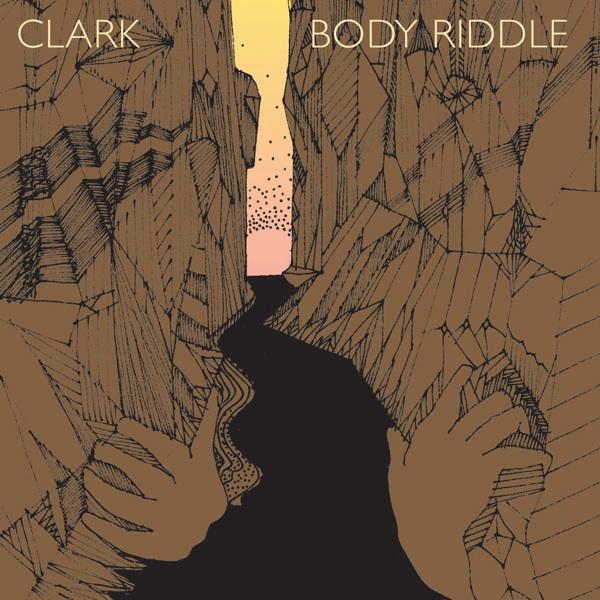
I've always been a little taken aback at how little attention this album has garnered among the music community. In my mind, it stands out not only as one of the finest triumphs to receive the ever so controversial IDM label, but also as a classic in the realm of electronic music as a whole. Perhaps it is a victim of poor timing; Body Riddle was released in 2006, approximately fifteen years after IDM became a concept, and a decade behind most of the genre's landmark albums (e.g. Selected Ambient Works 85-92, Music Has the Right to Children, Tri Repetae), so it is possible that the then-current musical landscape was populated generally by music fans simply uninterested in the kind of statement Clark had to make. Or maybe I got lucky, and this album just happens to speak directly to my tastes.
Regardless of the reason for Body Riddle's relatively overlooked status, it is, to put it frankly, one of my favorite albums of all time. Don't let the IDM tag fool you; despite seeing a release via the UK's revered Warp Records, this album does not resemble the music of the label's definitive artists very closely. Sure, it shares with such releases an ambition for pushing the boundaries of electronic music, as well as the evasion of easy classification that prompted the inception of the IDM term in the first place, but rather than safely follow the path paved by the genre's pioneers, it offers its own highly unique take. In particular, the sonic palette with which Body Riddle works is notably expansive. Over the course of its eleven songs, the album manages to cover woozy synths, evocative drones, blissful walls of sound, and moments of beautiful, understated tension without missing a beat. Clark even went as far as to learn to play acoustic drums in order to sample and use as the rhythmic foundations for the majority of Body Riddle. What's more, the quality of these sounds is incredible. Without falling prey to overproduction, Clark fine tunes each sound for ideal clarity, placing them appropriately in the mix to balance boldness with breathing room. This wealth of sonic ideas truly lends the album a sense of dynamic, one that allows it to touch upon a wide scope of emotions. Yet, miraculously, it maintains a binding cohesion throughout its 43 minutes. The songs flow into each other with seamless ease, and each one feels like an indispensable component of a maturely visualized bigger picture.
It's a praise that I can only apply selectively to the rest of Clark's work. His first two albums, which he released under his full name, Chris Clark, were promising, but not as original and fully realized as his music would later become. Although the first, the criminally short Clarence Park, was brimming with great ideas, it ultimately felt like an incomplete statement. With its followup, the darker Empty the Bones of You, Clark developed his thoughts more conclusively; however, although both records did carry sparks of his personal flair, he had yet to tap fully into his potential. His first post-Body Riddle release, the bombastic Turning Dragon, was relentlessly engaging, but lacked in dynamic. Totems Flare welcomed a number of additions into Clark's sound bank, even including his own voice, yet the individuality that came with it was at the sacrifice of a sense of focus. And Iradelphic, which is just over a month old at the time of this review, continued down the road of sonic variety, incorporating a refreshing use of acoustic instrumentation, but suffering from inconsistency. Despite their flaws, I enjoy all of these albums a lot, and I wouldn't go as far as to call Clark a one-album wonder. However, I consider Body Riddle to be unquestionably his magnum opus.
The album kicks off with "Herr Bar," an intricate exercise in stuttering drum patterns led by a chorus of chimes. The percussion keeps up an incessantly stimulating pace, immediately announcing the important role it will play throughout the rest of the album. Structurally, the song fluctuates through subtle valleys and mountainous peaks with a captivating sense of drama. It climaxes with a thick sheet of tasteful noise and pounding drums, then dissolves into an ambient interlude that leads perfectly into the next song.
"Frau Wav" starts as a continuation of the previous song's ambient outro, except it adds Clark's polyrhythmic drums into the equation. Shortly afterward, a somber string instrument rises to the top of the mix, combining with the rest of the atmosphere to give the song a drone-like quality. The percussion eventually cuts out entirely to allow layers of vast, airy fog and unidentifiable clicks take control of the song, but then reemerges with a steady, repetitive tap for a subdued finish. It took me many listens to fully appreciate this song, largely due to the low presence of obvious melodies, but my patience eventually paid off.
It's easy to view the next track, "Springtime Epigram," simply as an interlude, but it strikes me as something much more significant. Clocking in at just over a minute and a half, the song merely features a lone synthesizer that repeats a melody with virtually no variation. In theory, it is simple, but the longing evoked by the melody pairs up with the nostalgic tone of the synth to create an emotionally gripping product. Although the nostalgia doesn't necessarily call to mind any specific era, I can't shake from the song an association with memories of the past.
"Herzog" is another beatless synthesizer spotlight; however, contrarily to its predecessor, it presents itself in a much more urgent light. Driving arpeggiating synth melodies lead the song while swirls of amorphous electronic sound fill out the background. Nearly halfway through the track, the melody becomes brighter, and a metronomic pulse of organic clicks begins reinforcing the rhythm. As the song cycles through its two primary melodies with emphasized dynamic, what sounds like a set of unintelligible vocoder-affected voices occasionally shows up to provide light harmonies. The track then tapers off with an assembly of toneless, percussive noises. Despite the absence of percussion, the song succeeds in taking the listener on a thrilling ride.
The beats return on the fifth track, "Ted," for one of the album's most immediate moments. Instead of taking the form of the elaborately sampled acoustic drums that appear on most of the record, the percussion here tackles moderately simple rhythms. However, this more straightforward approach works to the song's advantage. It is one of the few tracks on the album that actually prompts dancing, yet its melodies are among the record's strongest, so "danceable" is not to be confused with "dumbed down." The tail end of the song welcomes a return of the skittering drums for a brief outro that foreshadows the next track.
"Roulette Thrift Run" is one of the least melodic songs on Body Riddle, but makes up for it with its disorienting atmosphere, catchy scat-like vocals, and especially exhilarating percussion. The unsettling sounds that have been brewing under the track throughout its first three minutes eventually take over, ending the song in a cacophony of atonal noises.
The seventh track, "Vengeance Drools," hits hard with a bold attitude, supplying a sinister result. The beat wouldn't feel out of place on a hip hop album, but this isn't your average boom bap. With Clark's surgeon-like sampling precision under its belt, it has no trouble packing the technical impressiveness that makes the percussion on Body Riddle so consistently exciting, yet it doesn't forgo an irresistible head-nodding sensibility. It is certainly commanding, but its the descending plink that acts as the melody which loans the song its menace. Around the track's halfway point, the melody switches up and takes a backseat to drums, which somehow trump those in the first half of the song in intensity. They then retreat and gradually fade out as an ominous array of drones closes out the track.
Similarly to "Springtime Epigram," the next song, "Dew on the Mouth," is a short, drumless piece that barely surpasses one minute in length. Like its aforementioned sibling, its place on the record feels more important than that of a standard interlude. Its melody is memorable, its atmosphere is alluringly eerie, and its ending transitions smoothly into the following track.
"Matthew Unburdened" sees the complex drumming reappear once again, this time for one of its most excellent achievements. It begins in an odd time signature that straddles tantalizingly close to 4/4 without quite settling into it, working the listener into a sense of insecurity. Meanwhile, dissonant piano chords trod lightly on top of it, which further adds to the unstable vibe. The drums soon pull back to create a suspenseful break, then the song truly opens up with a straightened out groove and absolutely gorgeous stringed instrument arrangements. These strings eventually consume the mix, creating a euphoric wall of lush sound. It plays out for nearly two minutes, then dies down to make way for the emergence of another off-kilter beat that carries the track to its ending.
In a way, the penultimate "Night Knuckles" is proof of Clark's compositional ability. With the clinking of a music box serving as the song's primary sonic tool, and only a few ornamental sounds providing extra color, its instrumentation is among the most minimal of Body Riddle's tracks. However, the assortment of compelling intertwining melodies and coherent harmonies allows the song to retain its emotional grasp with confident fluidity.
I could hardly ask for a better closer than "Autumnal Crush," a positively overwhelming seven and a half minutes. The song introduces itself with somber minor synthesizer chords backed by soft, shuffling percussion, which continue on as a slightly obscured voice mumbles the words "and I still miss you." The instruments then rise abruptly in volume, which marks the first major development in a gradual buildup. After a few more bars pass, the intensity of the instrumentation increases yet again, bringing the song into full force. As the chord progression repeats, the noise in the atmosphere becomes increasingly more prominent, until eventually, it takes the track into the album's most crushing moment yet. The phrase "wall of sound" is no longer sufficient; this is the destruction of that wall, a climactic explosion of compressed aural bliss. At its resolution, only the droning bass line and distant melody remain standing. The two repeat together in harmony as they steadily fade out and allow the song to approach silence, leaving the listener the last few minutes of the record to contemplate the experience in the company of achingly beautiful drones.
In just under three quarters of an hour, Body Riddle says more than many artists have said in their entire discographies. And like many of the albums I dearly respect, it feels less like a collection of songs and more like a cohesive story. As great stories often do, the record presents a setting too mesmerizing to be observed from a distance; rather, it transports the listener into its world, traveling through numerous twists and turns, yet refusing to let go.
(Does anyone else think this record is as good as I do? Am I just crazy?! You can let me know on Twitter.)